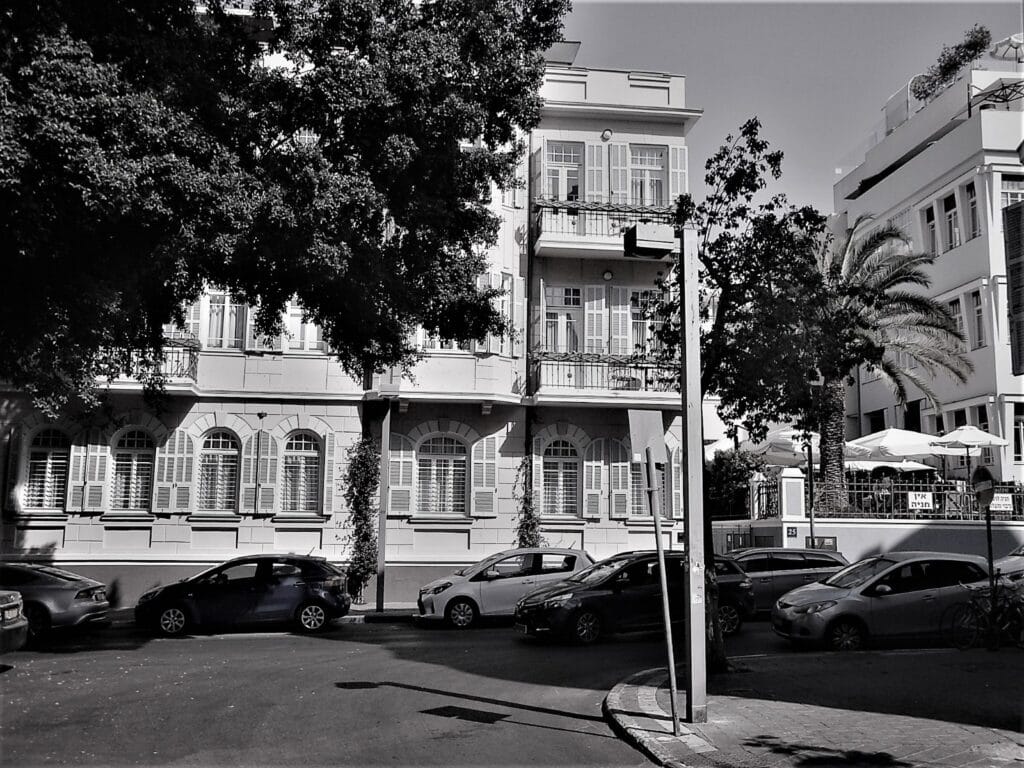
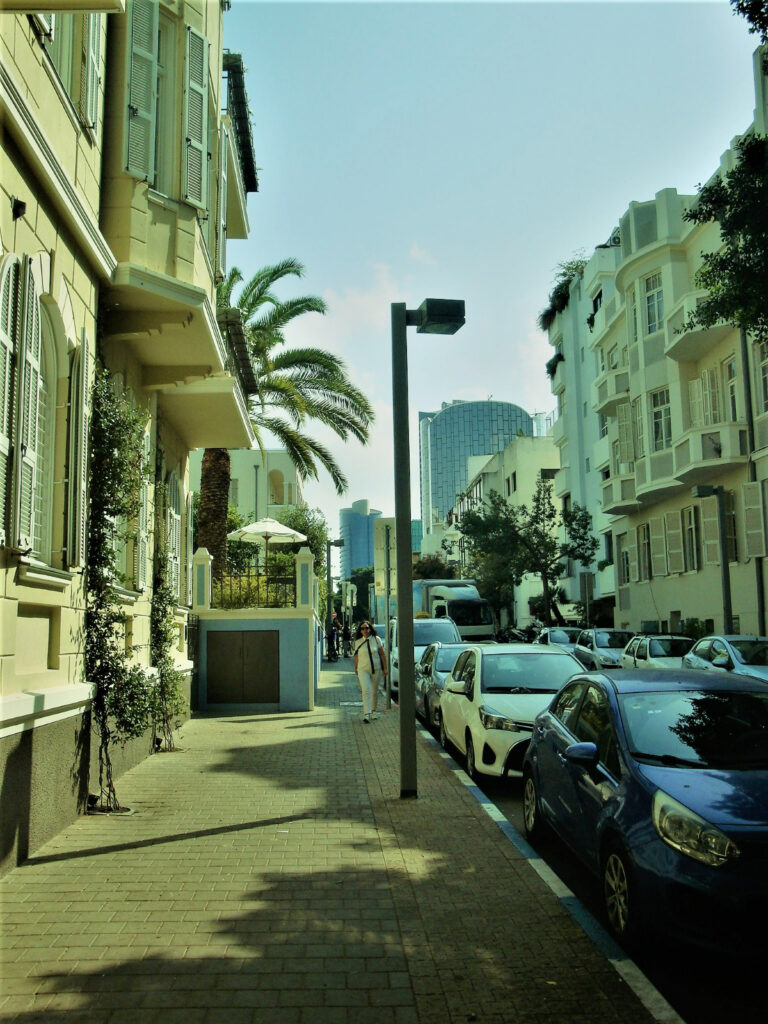
In a Tel Aviv just as technological and avant-garde as scruffy and oriental, I search for the symbol of the Zionist affluent at the beginning of the XX century, the Bauhaus houses. There are about 4000 of them all over Israel, and they are particularly concentrated in the quadrangle around our flat, between Yavne, Montefiore and Melchett Road. Built in the roaring twenties by wealthy German, Russian and American tycoons on the sands of Tel Aviv, some of these houses are sumptuous, others more sober, but all proud and regal status symbol showoffs. This is a unique concentration of heritage buildings from the Dessau school, which gave rise to the modernist architectural complex known as the White Ciy, characterised by elegant lines and tropical gardens. Almost embodying the symbol of New Israel, then under British Mandate, dozens of architects from European schools created an ideal city from scratch, adapting Bauhaus to the region’s torrid climate and local building materials. Not only that, the longevity of Tel Aviv’s modernist heritage is also due to the use of resisting materials imported from Nazi Germany itself, as part of the controversial ‘Transferumbau’, the secret pact between Israeli Zionist leaders and Nazi leadership through which thousands of Jews left the Reich in return for large cash payments. These proceeds were deposited in British banks in Palestine to enable the purchase of German building materials until the outbreak of the Second World War, enabling the Reich to collect up to 50 million marks. Tricks of History.

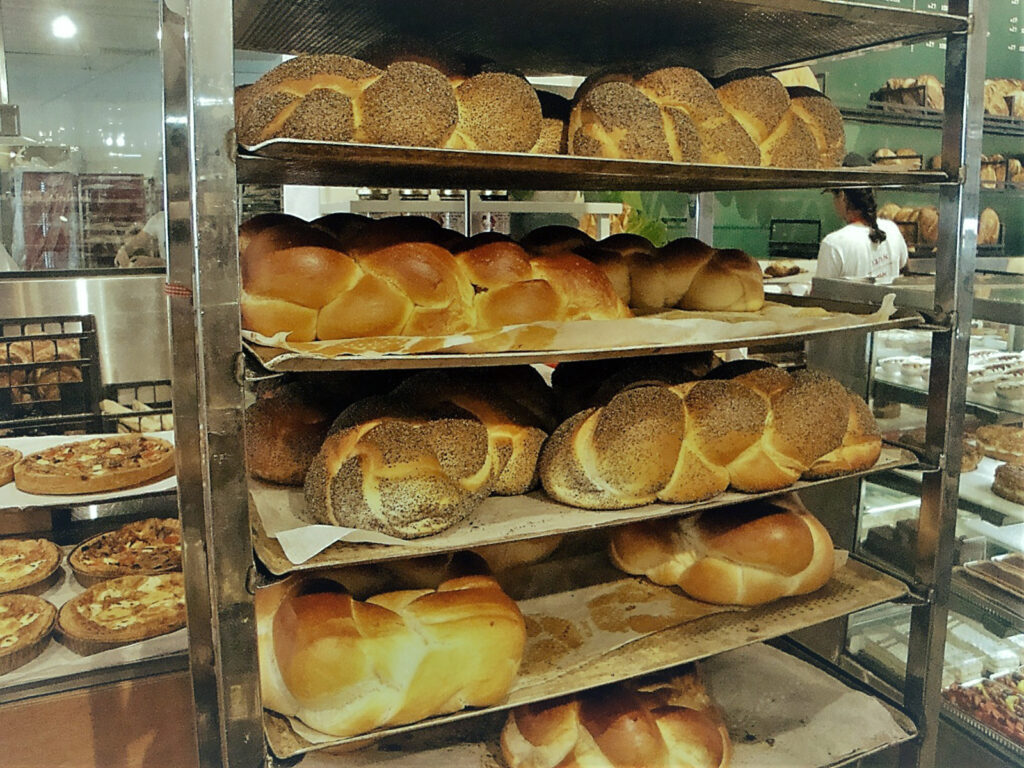

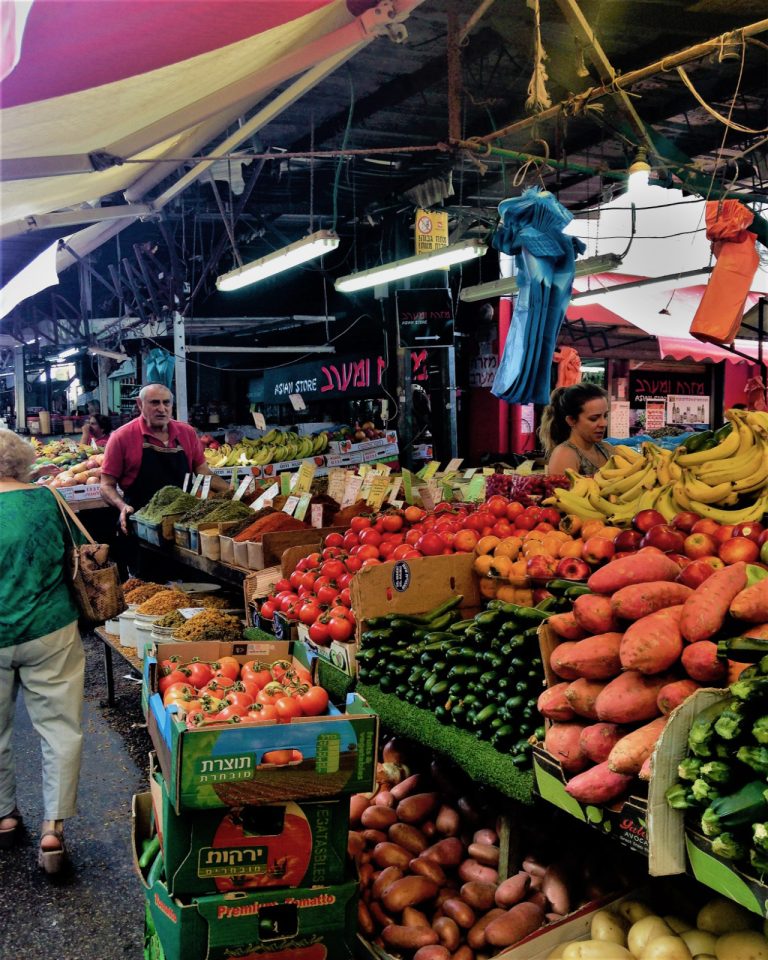
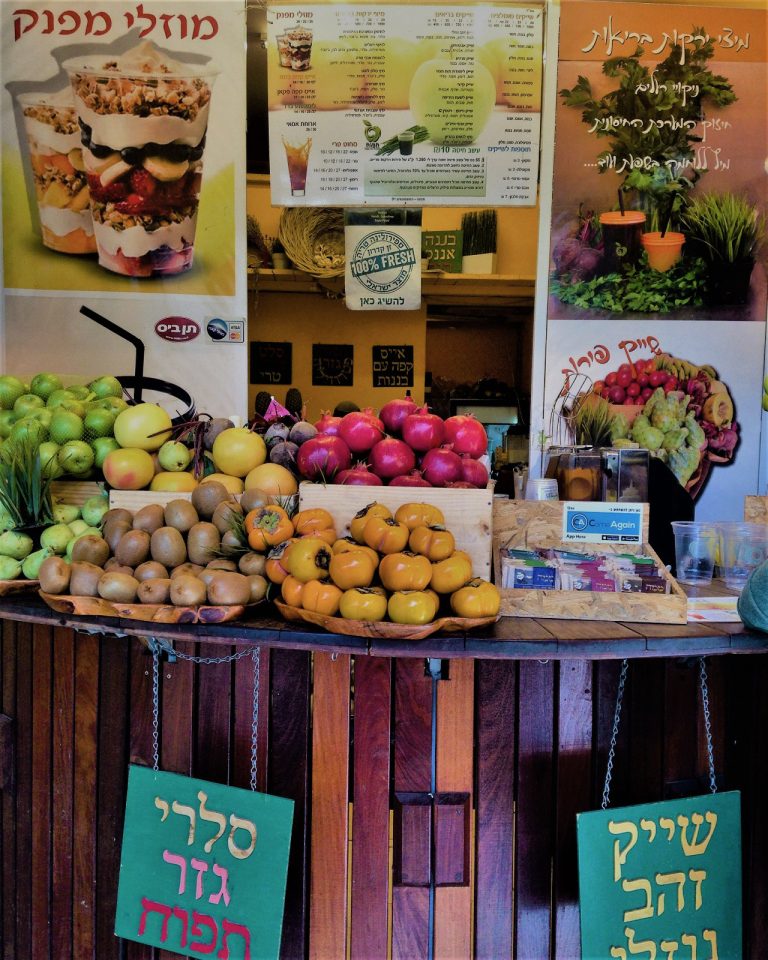
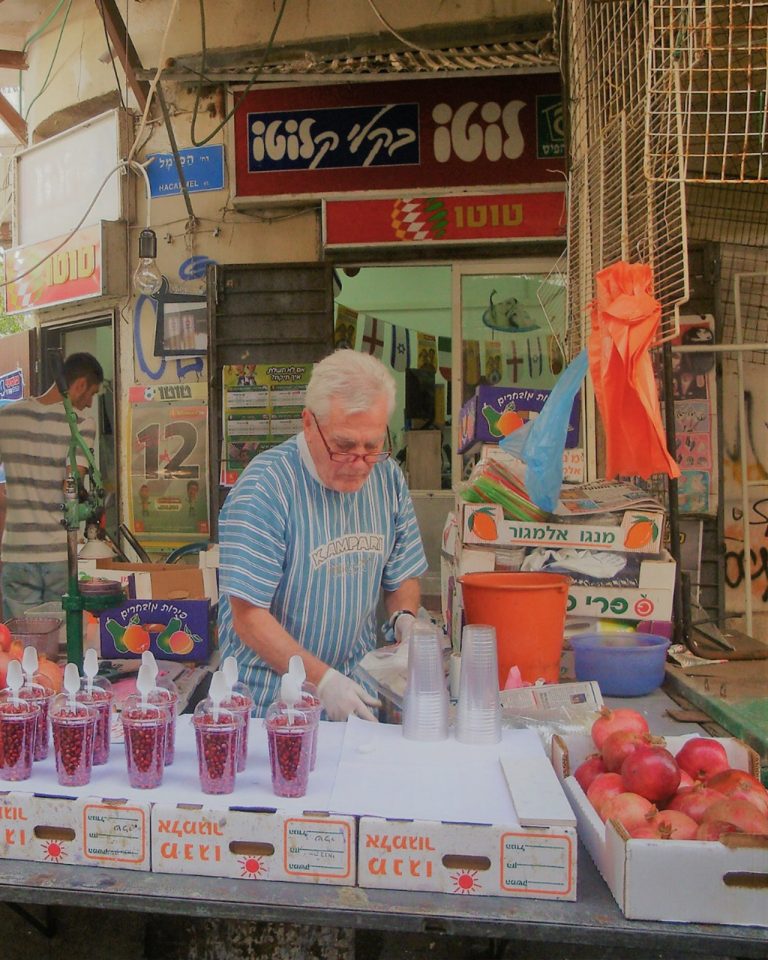
For breakfast I stop at one of the many fruit stands on the corners of the city for a pomegranate smoothie, one of the symbols of the Israelite religion, the elixir of this land, once the pride of the Palestinian landed gentry’s trade. I then proceed to the large kosher Lehamim bakery at Hashmonaim 103, ideal for tasting local sweets and freshly baked bread, as well as one of the best challah, the Shabbat cake, the feast day of the Jewish week that begins on Friday evening. The morning continues at the Carmel Market, the city’s historic market, the realm of street food, bargaining, and stalls selling novelty items. A tale somewhat overrated in common tourist guides.
I prefer to get lost in Neve Tzedek, the district of design and fashion boutiques nestled between the skyscrapers of the city’s pulsating centre. Neve Tzedek is a partly pedestrianised corner of the city made up of historic buildings on a human scale, animated by slow-moving neighbourhood mechanisms, literary cafés, independent bookshops, craft workshops, sophisticated pastry shops, informal restaurants in the shade of trees, and sophisticated individuals. Further along, towards the sea, stands the old Jaffa station, Hachana, once disused and now converted into a food court and contemporary art exhibition centre.
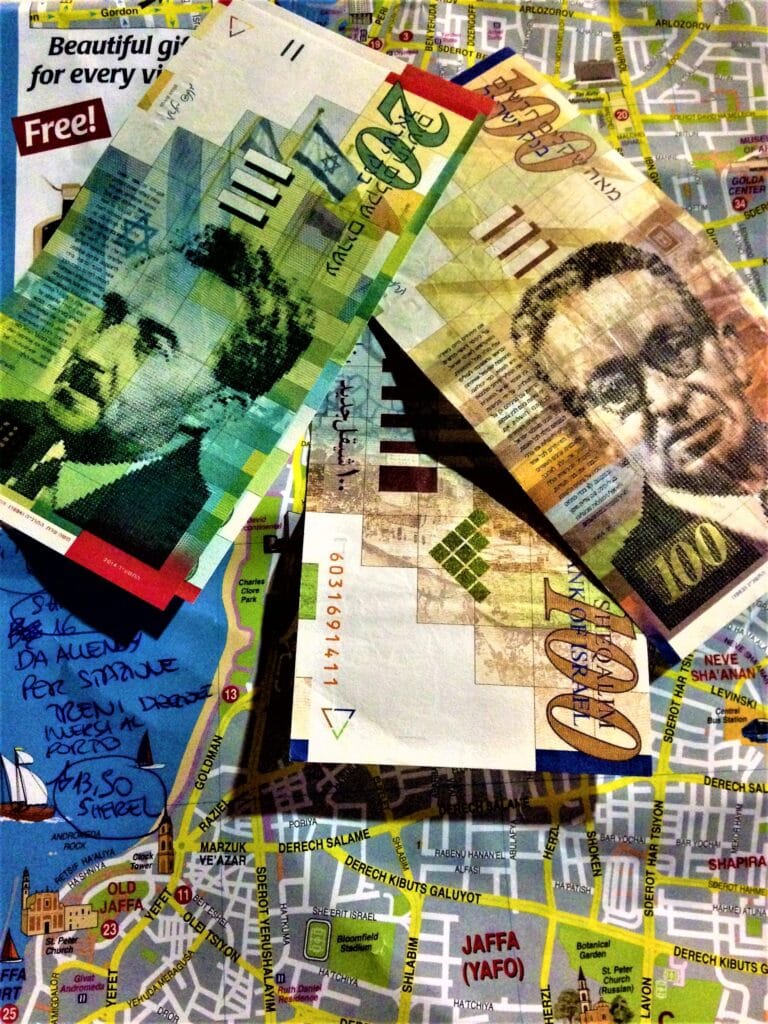
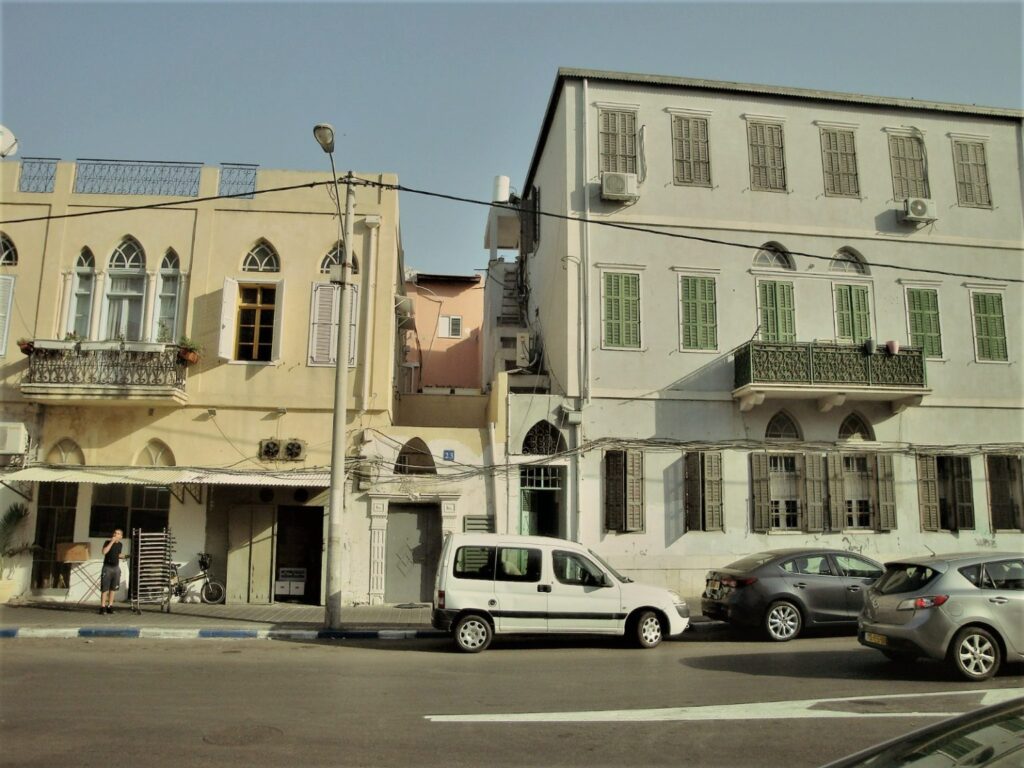
I finally arrive in Jaffa, the ancient city founded by the Phoenicians, where Perseus rescued Andromache. The city, which has always been a religious, commercial and strategic port in the Mediterranean, had only 10,000 people in 1880. Before Tel Aviv was quickly built north of Jaffa under the British mandate (from 1917), the city flourished for the citrus fruit trade.
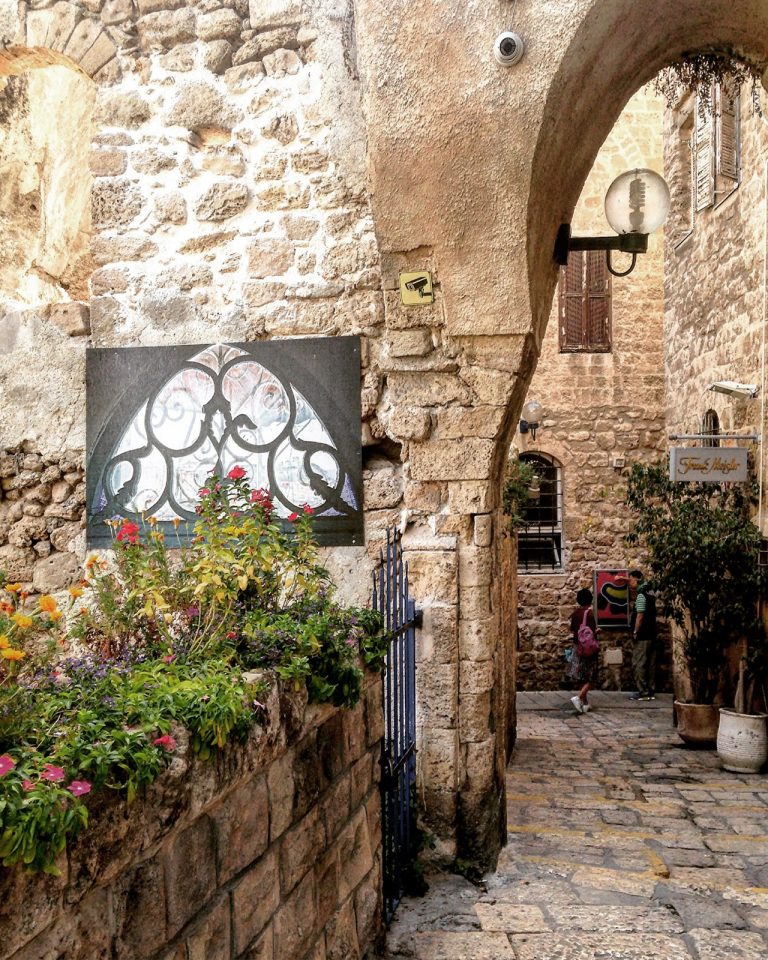
The small Ottoman-style town overlooking the harbour was in fact surrounded by sesame, cotton and citrus plantations. Today, Jaffa reminds a long past of Ottoman domination, symbolised by the konaks and minarets, and, for the time being, somehow hosts a religious syncretism, if one considers the monastery of St Peter’s exactly in the central square. Although part of the Jewish community had been residing here since 1840, it was not until the late 19th century that ships laden with the first Zionists began to dock at the port of Jaffa.
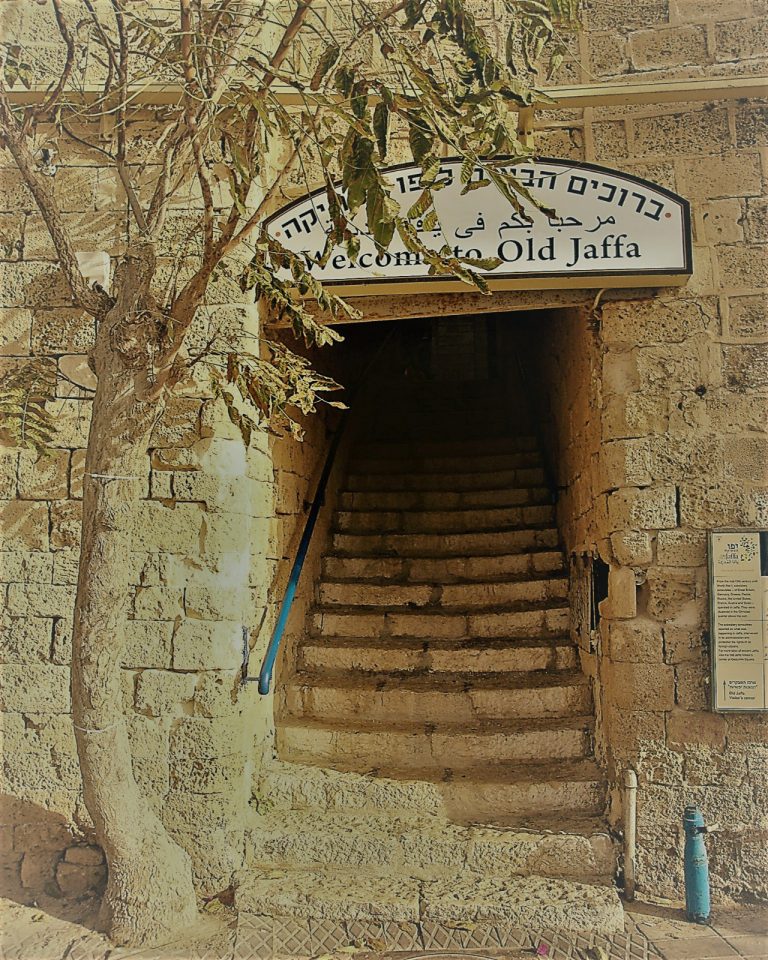
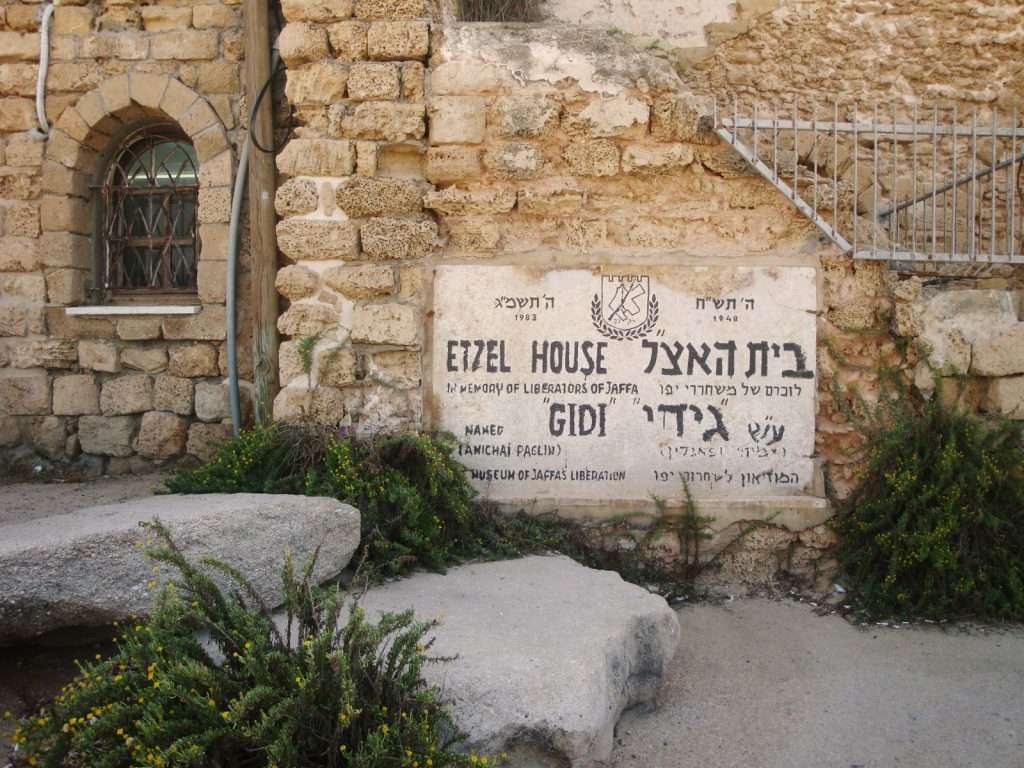
The conflict between the local Arab population and the growing Jewish minority began to escalate after the expulsion of the Turks by General Allenby in 1917. n 1921, the Arabs led a violent revolt against the Jews, until the final clash in 1948 (the first Arab-Israeli war), after which only the Jews remained in old Jaffa, who modernised it and turned it into a tourist attraction, with a few art galleries, boutiques and cafés on the waterfront. A monument on the waterfront commemorates the events of ‘48, which “finally” gave the Jews back “their land”, freeing it from the Muslim yoke.
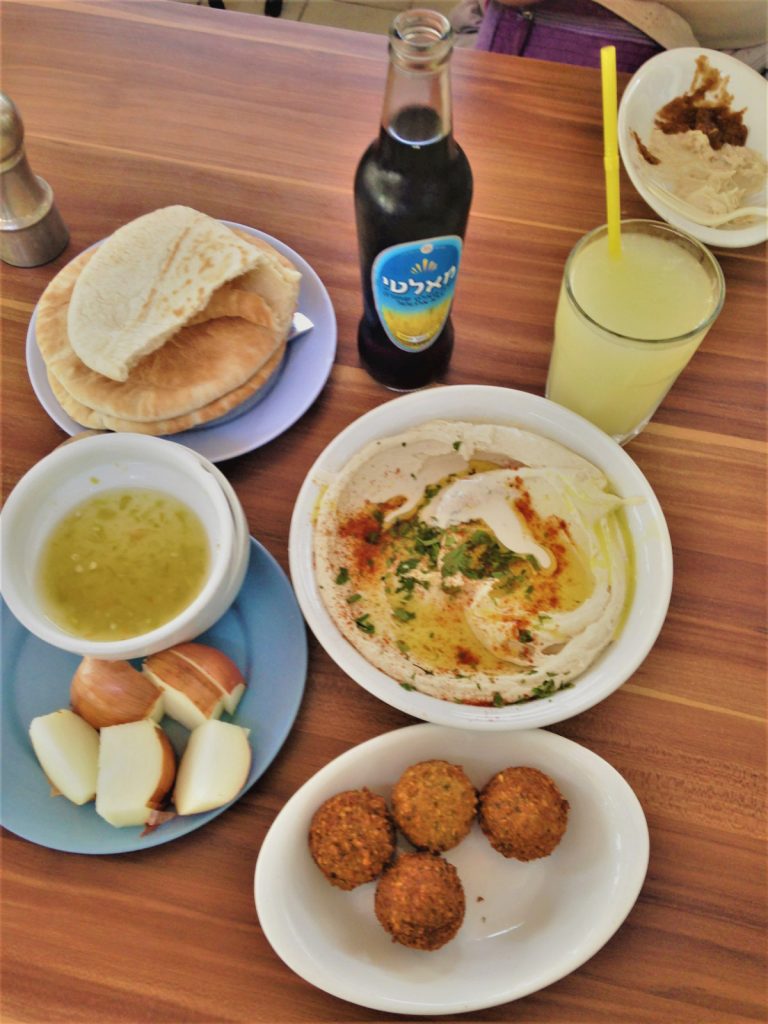
However, it is the life of New Jaffa that strikes me, outside the walls of the old Kasba, where the majority of Tel Aviv’s Muslim Arabs reside. One only has to descend into downtown Jaffa to encounter the Muslim community that has been concentrated (ghettoised?) here since the mid-20th century conflicts. I confess that I wandered into this large neighbourhood to find the renowned ‘Abu Hasan’, Jaffa’s best falafel and hummus joint. Here I tasted three varieties of hummus, chickpea, bean and spicy. Prices drop visibly compared to the city centre, it is now difficult to see unaccompanied women sitting at the bar or showing off their heads. There is something profoundly utopian about everyday life in New Jaffa. Administrative signs are in Hebrew, signs, premises and posters are in Arabic. I heard the muezzin’s call to prayer on these streets for the first time in Tel Aviv, just as I met two Israeli girl soldiers resting from their barracks activity behind the mosque. 18 and 21 years old, they were both ‘serving’ their three-year military service, a conditio sine qua non they would not be able to enter university, they told me.
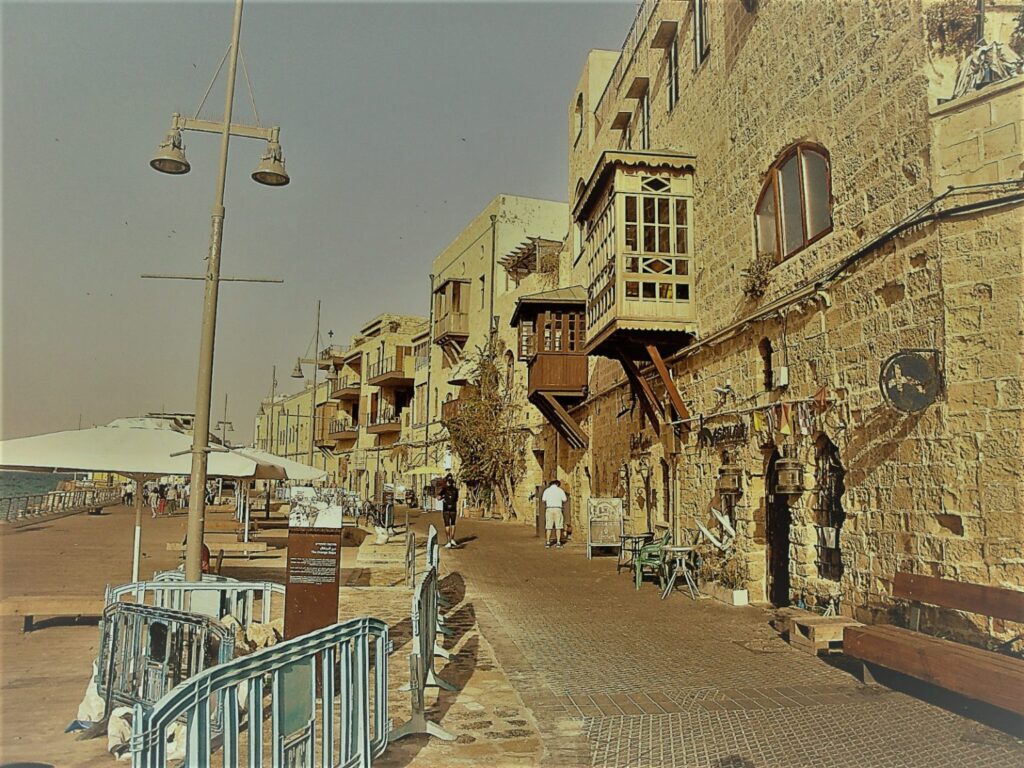
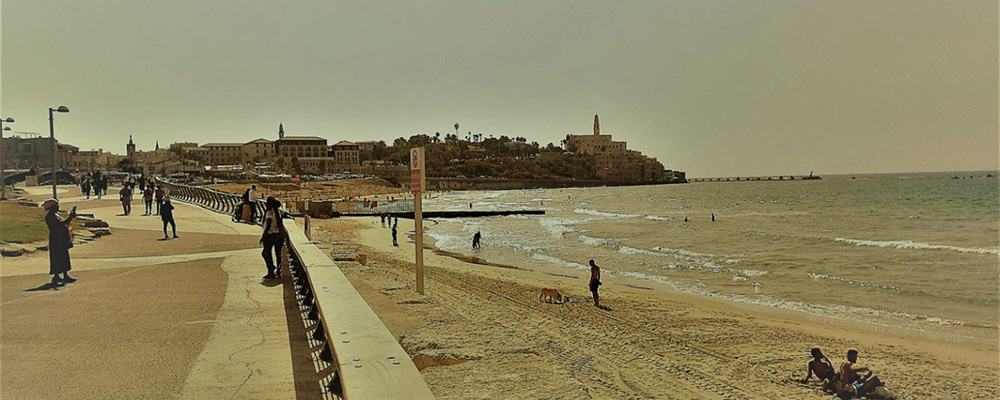
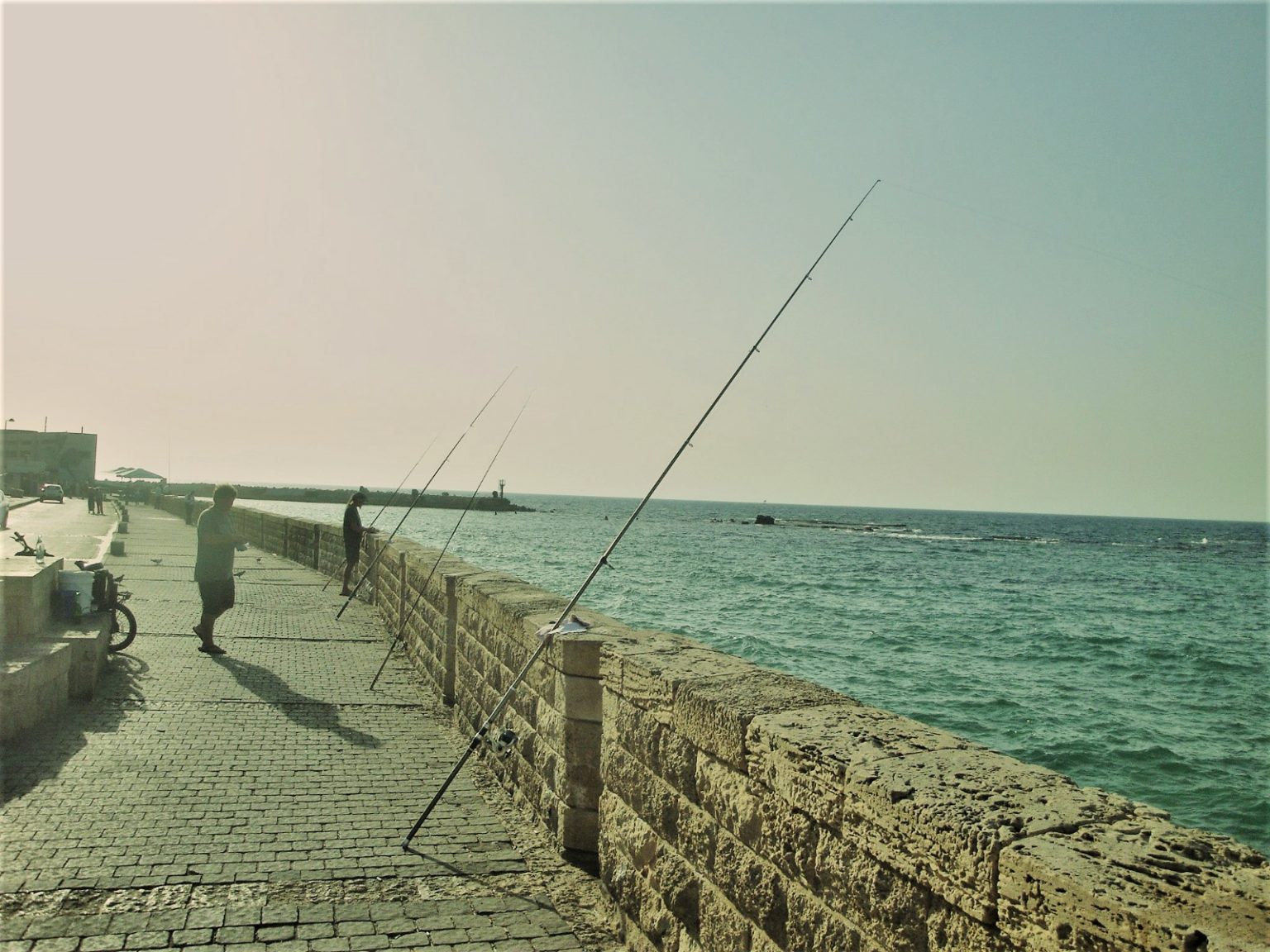
I return towards the sea, beyond the ‘fence’ of Jaffa, towards the new Tel Aviv. The hubbub of Tel Aviv is lost in the waves of the calm Mediterranean, it is dusk, I fall asleep. Later, at the ‘Goldman bar’ on the waterfront, I think back on how two sides of the same coin can coexist daily in apparent calm, enjoying the same immense sea, each praying to his own god, in a more or less practising form. Or not praying at all, yet still opposing distinct identities. In the evening, I immerse myself again in the reality created by Zionism, at the ‘Café Suzana’ on Shabazi Street, where diners gathered under the plane trees of Neve Tzedek converse in their mother tongues. Spanish, Scandinavian, Polish… They intersperse with phrases in abstruse Hebrew, the language through which the Zionists have communicated in the new society and written their recent history. It seems like an invention of history this land, where in a century a people gathered from all over have shaped a capital on the sand dunes of Judea, creating an identity, undoing, affirming, dividing, uniting. Jews who believed they were entitled to a state chose Tel Aviv to gather from all corners of the world, and designed it to accommodate individuals of different cultures and traditions, importing both Western avant-garde and wealth as well as the most atavistic rituals. The Zionists brought with them knowledge, modernity, they built prestigious universities, mammoth buildings, financial centres, branches of multinationals, diplomatic representations, museums, infrastructures, embedding cosmopolitanism and modernity in a previously unsuspecting Middle East, which even today resists inexorably in the disorder and approximation of the city, in the slow rhythms, in the flavours, in the colours of the sky, of the sunsets.
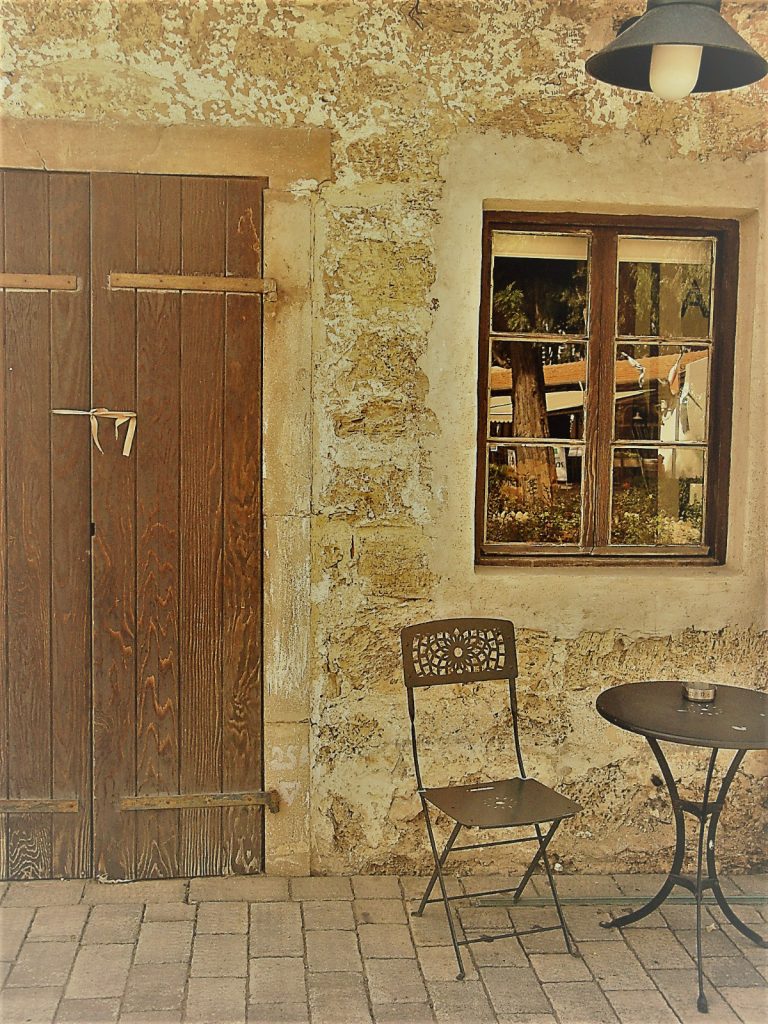
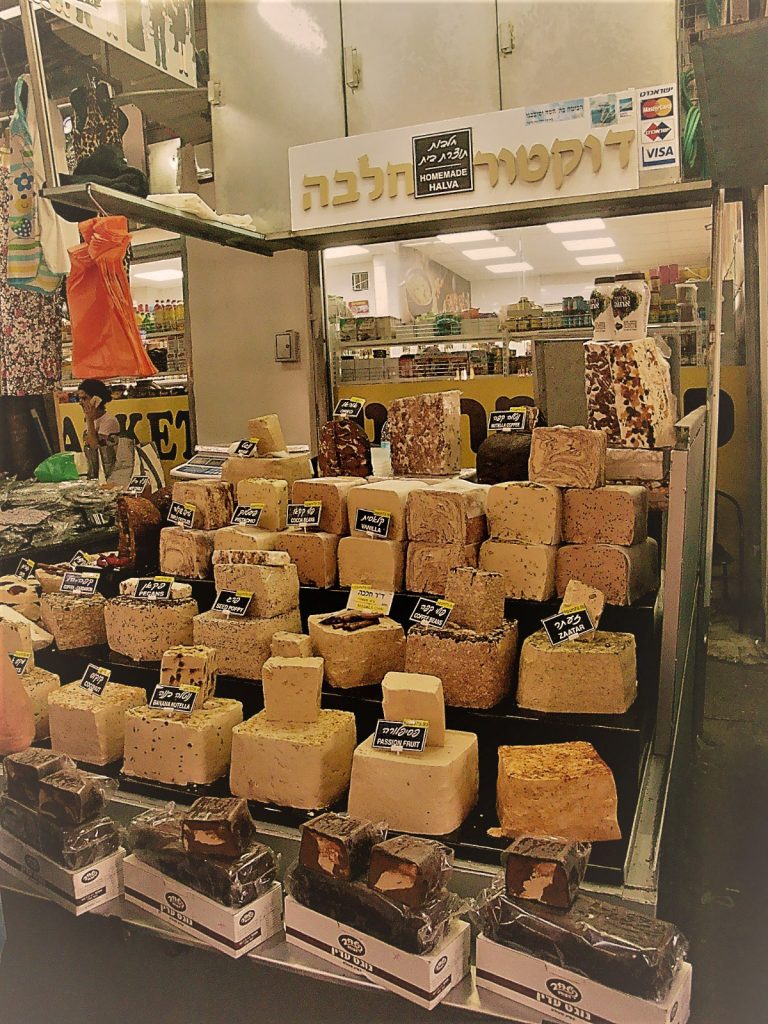
The yearning for cosmopolitanism and the desire to make Tel Aviv the most welcoming and livable place in the recent state has spread the common thought that the city is the realm of the permissible, where every culture, color, sexual orientation, thought and dress is accepted; this has enriched the city with youth, liberal ideals, international events, business opportunities, parties: the realm of the possible. But to confuse Tel Aviv with a western city is an easy mistake. It is in the invisible walls that the daily confrontation provoked by the conflict is hidden. In the monuments celebrating Israeli victories in Muslim neighbourhoods, in the Israeli barracks in front of mosques, in the security checks in various parts of the city, in the desire to erase the past and impose the present, The same Jewish present that in its own religious bosom harbours ancient internal feuds, between groups of different language and origin hardly willing to betray their own history in favour of the New Idea of language, culture and the State of Israel.
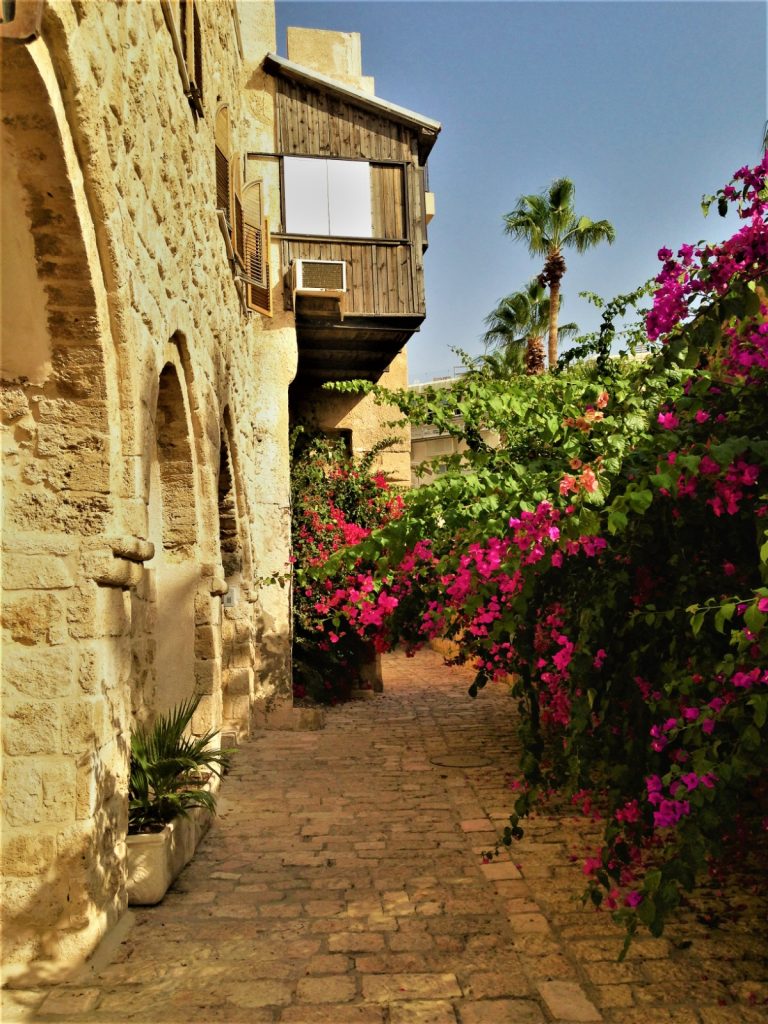
I could not expect to understand everything in forty-eight hours, I had never seen such a crazy place, and I would never forget that sea, the daily companion of Tel Aviv’s inhabitants, accessible everywhere, calm during the day and rippling in the evening, almost symbolising a Middle Eastern getaway to freedom.
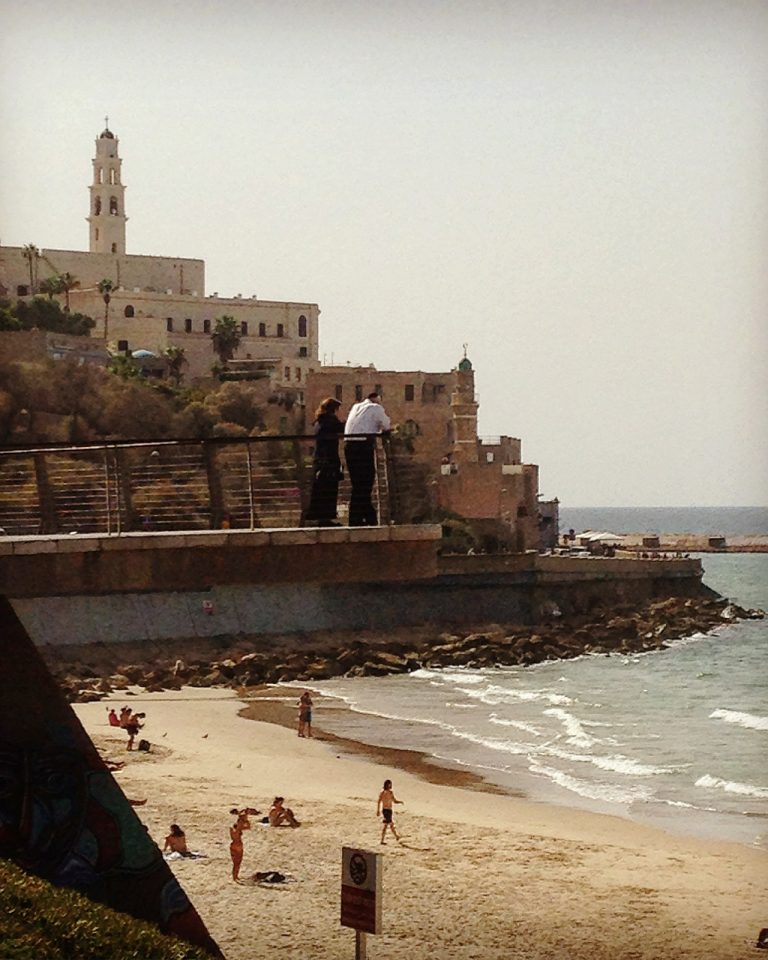
The next day we would leave for Haifa, heading north. Finding ourselves accidentally abandoned by our transfer at the Ben Gurion, we would find no taxi in service on Shabbat day. Only the last northbound sharut would pick us up, thanks to a persuasive Jamaican Jewess in the mood to act as interpreter, we heading for Stella Maris, she for a hippie tent camp near Caesarea…