I once read an article about Hamra quarter, the magic venue of the Lebanese intellectual and cultural activity between 1960 and 1970. Hamra Street was equally known as the Champs Elysees of Beirut. To me it looked architecturally ugly, busy, chaotic, tangled in a fabric of streets distinguished only by the colours of spice and vegetable markets, shawarma fast-foods, bakers and manouche take-aways. Yes, it was suffocatingly hot, with humidity through the roof and a persistent deafening noise, but it finally felt like being in an Arab quarter. The two-way comings and goings of cars and pedestrians, the merchants scrambling to snag the best customer, the brisk pace of the traders.. they all clashed with the indolent coffee drinkers of ibrik coffee, who were perched on steps or kinda occasional bars in the middle of the sidewalk. Here they drank Najjar coffee, roasted strictly in Lebanon and spread across half the Middle East, especially mixed with cardamom!
As I learnt from some writings of Pulitzer Prize candidate Borzou Daragahi, this neighbourhood turns out to be bastion of liberalism, a refuge for the co-existence of Lebanon’s many religions: Maronites, Sunnis, Orthodox, Druze, Scythians, Melkites. Hamra seemed to me as their centuries-old refuge, home to nightclubs and red-light clubs, bars and restaurants serving alcohol, concert and art exhibition halls, university clubs, shisha bars and rooftop terraces. Perhaps this is why all the Lebanese people we would meet.. liked Hamra: it is an uncontrolled and indistinct container of today’s Lebanon, without excluding any diversity and without explaining the reasons for a possible coexistence, embracing everything that remains of the country, although in an ugly neighbourhood. Notwithstanding this, Hamra remains the symbol of a glittering past and of the identity that unites the city’s inhabitants.
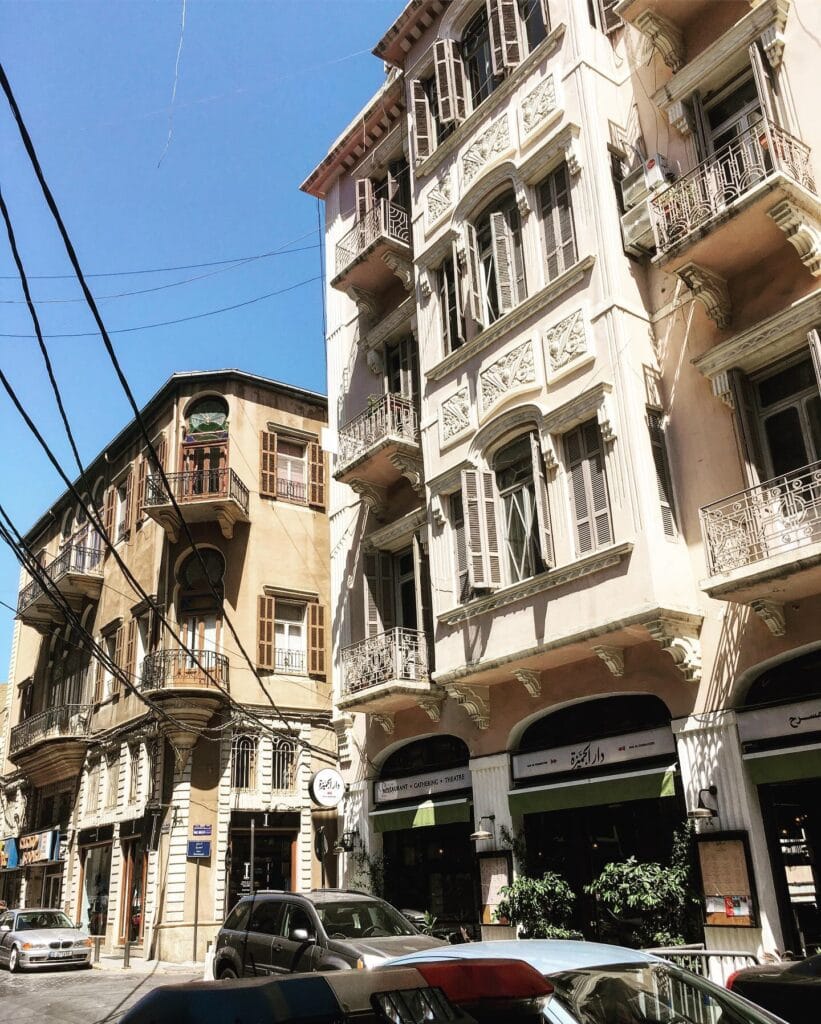
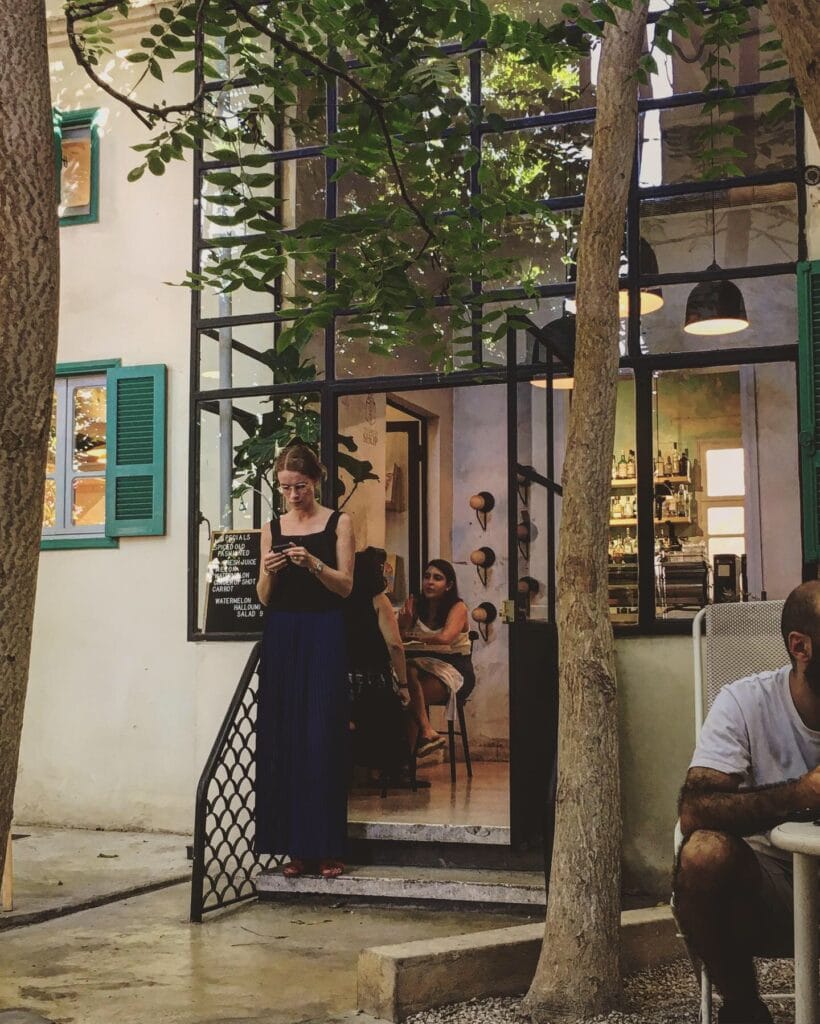
And so, there was nothing to look for, nothing to ‘see’, there was only to blend in with the mass that circulated those streets and understand that exactly this “human pot” was the soul of the neighbourhood. Above all, I realised that the beauty of Hamra did not lie so much in the exteriors, whereas in the interiors, in the most characteristic places that could be reached narrow stairways and side streets. So, thanks to mi friend’s flair, we placed ourselves on the patio of T-Marbouta, an informal and healthy-chic little place that served traditional dishes at a reasonable price. “This is for you, you have the same eyes”. Toh! Even now I still wear the lucky charm bracelet which that waiter gave me. The classic eye of Allah that wards off misfortune in half the Mediterranean, from Greece to Turkey, to the rest of the Levant and the Middle East.
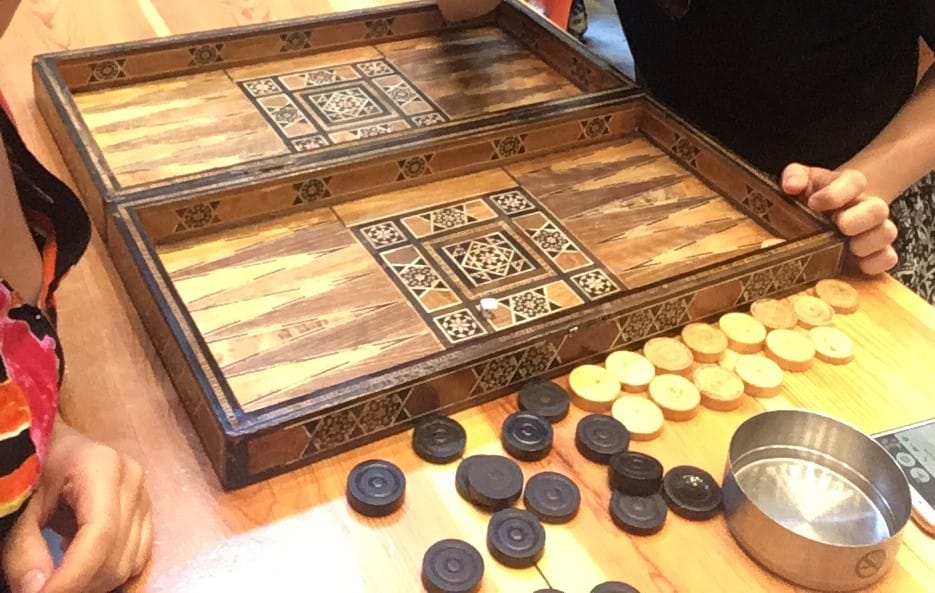
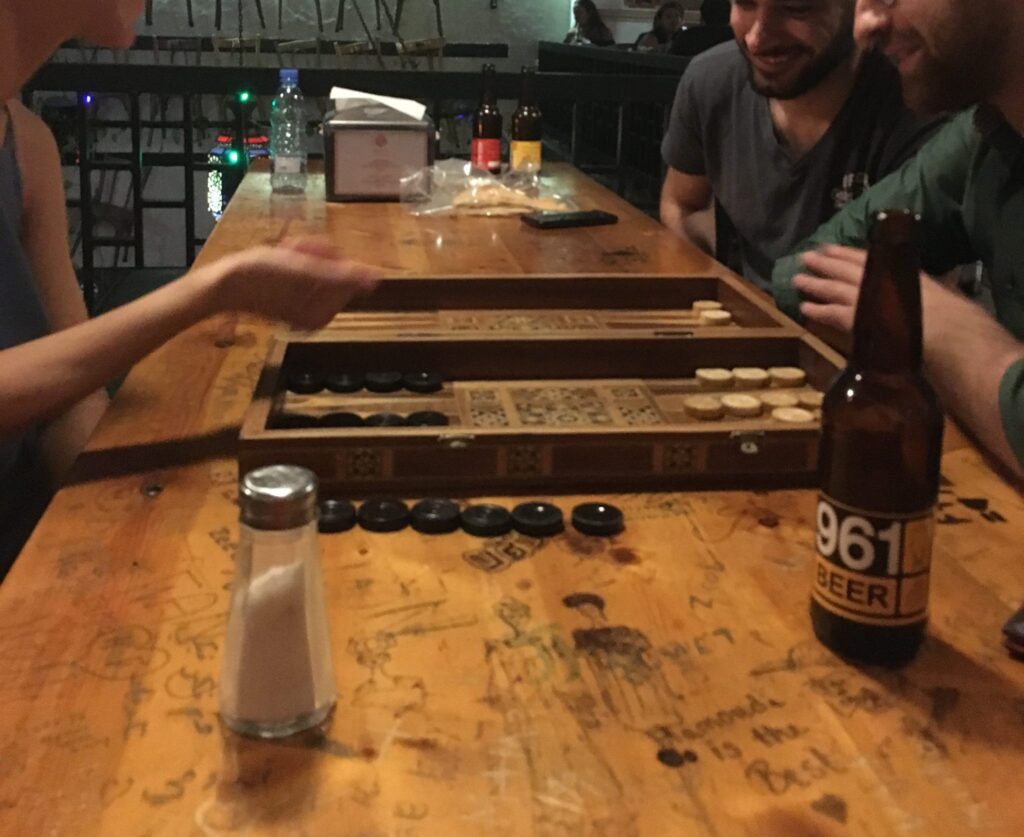
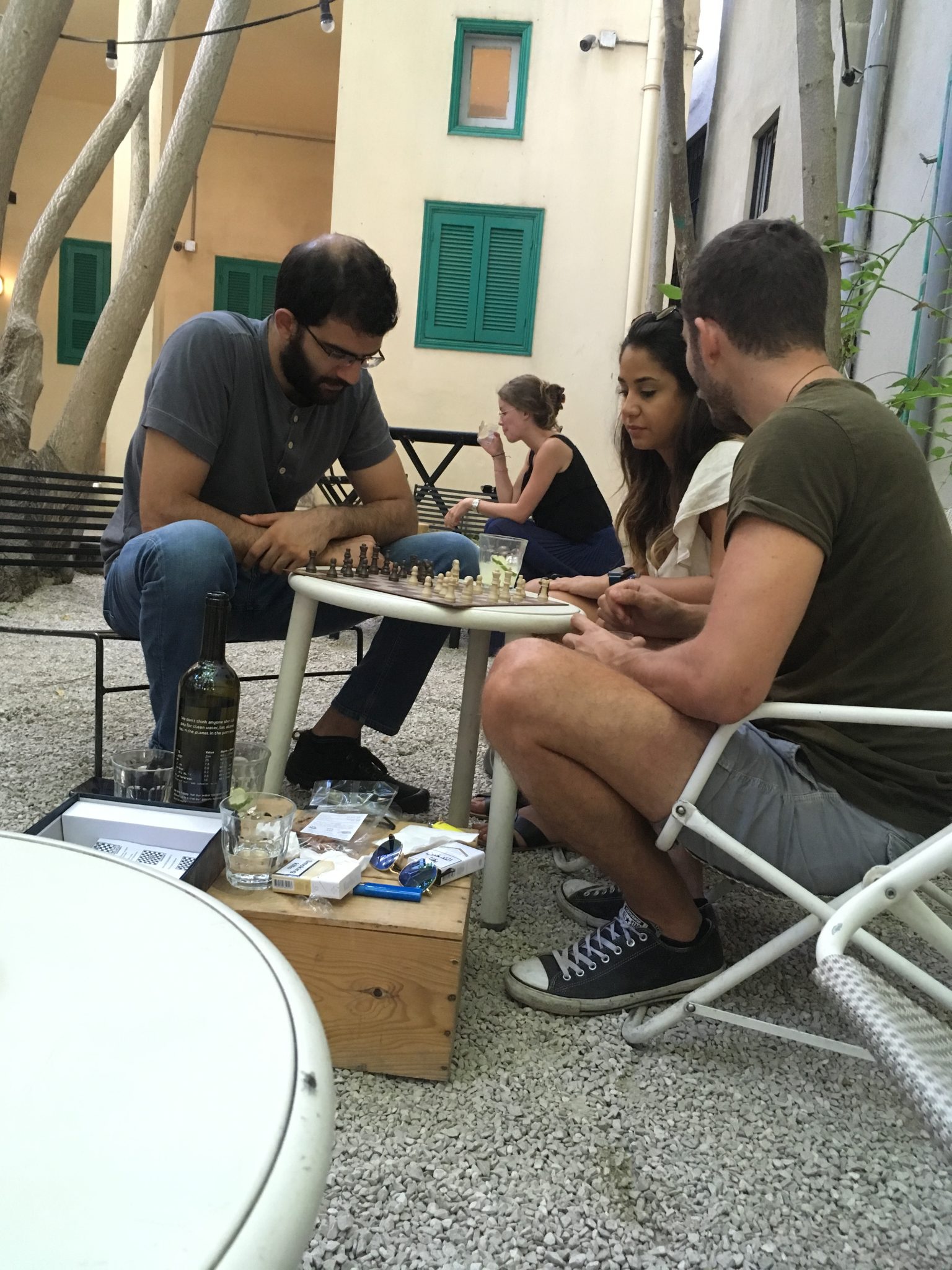
Having an individual like Maria Chiara by your side can often bring pleasant surprises: ‘Have you ever played backgammon?’ ‘Tavli? (I only knew what it was in Greek). I’ve always watched but never tried’. I turned around and saw that almost the whole eatery was playing. It was about five o’clock and families and groups of students were drinking tea and coffee, accompanying it with knafeh, biscuits, marmalade, labneh. One thing I noticed, their tables were always full, but it was never necessary to finish the food, as if it had to keep them company. ‘You know what? Let’s play.’ Today, thanks to Maria Chiara, I know how to play backgammon, at least the Armenian version, the one she had learnt and taught to me. I have yet to understand how many national varieties of backgammon do exist. The following evening we would also take part in a mini backgammon tournament in Hamra.
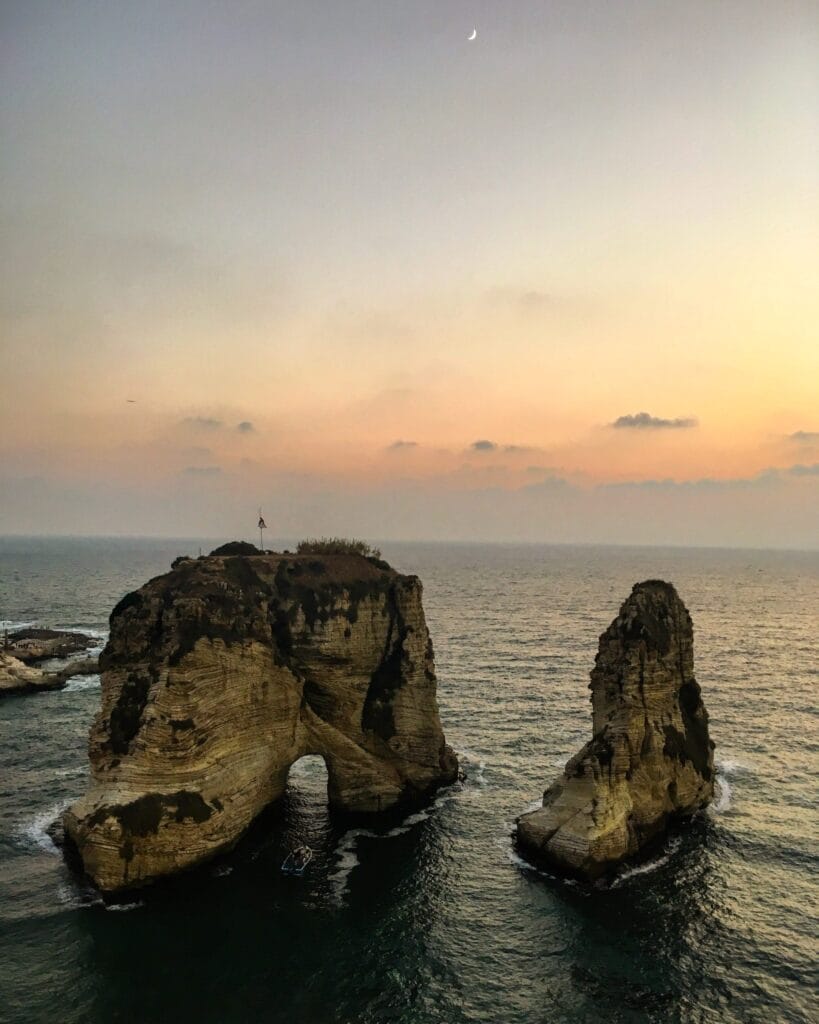
A good hour had slipped by. My schedule was in danger! We already had at least 10 km of walking in our bodies, but we had to go to Manara to see the Raouche rocks at sunset!
We walked to Manara, the ‘lighthouse area’, where previously sumptuous, now dilapidated buildings, led to the sea, abundant of kiosks, beach clubs, luxury hotels. Realizing the hill leading to the Raouche or Pigeon Rocks was very steep, I felt hard my painful blisters. We were both exhausted. Thus, we hopped on the first bus. An old driver had granted us a lift in order to scale the hill, communicating in some lingua franca of dubious classification. On board, we were not the only western travellers who had opted for that solution. In fact, we smelled and spotted some ‘Britons-on-vacation’ hat, at the bottom of the bus. Just 100 metres, driving with the doors wide open, we jumped off to find the best vantage point on the Pigeons. Being in a predominantly Muslim area, on the first attempt we failed: they didn’t serve alcohol. At the second shisha bar, with a little patience, the waiter was eager to give us the two-for-one beer promotion before seven o’clock in the evening, the famous Almaza beer. All accompanied by raw carrots and tubs of mixed dried fruit, which we would always find on any Lebanese table. The first sunset in Beirut, over the sea, was fantastic.
How to go back to Gemmayze?
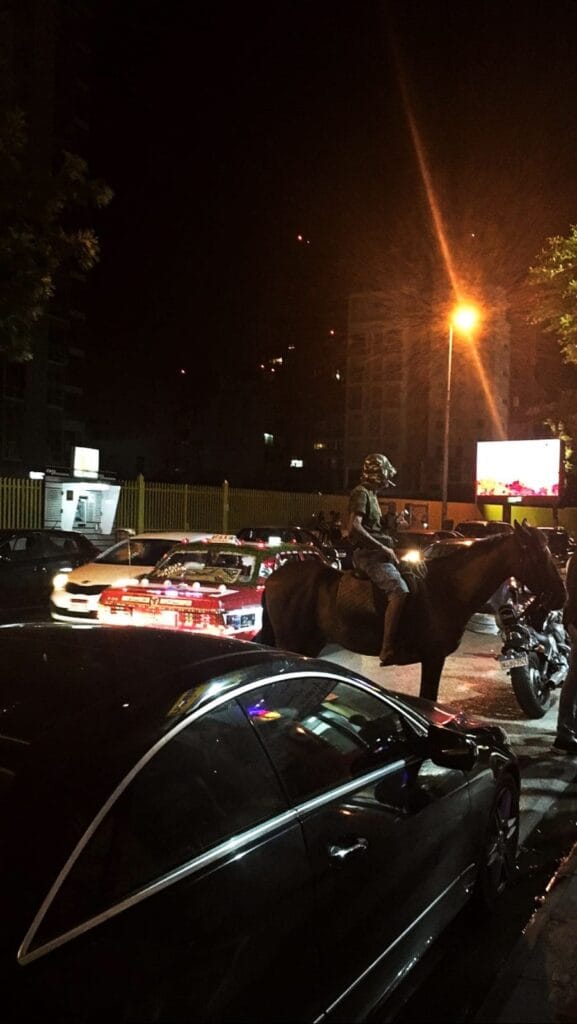
Well, the time had come. We jumped into one of the red-plate taxis that had honked at us on the way. Already hosting two other girls inside, as we jumped into the back seat, the bottom seats of the taxi resulted in four of us on top of each other. “To Saifi hostel, please”, “1000lb”. Everything was great until that fare, which was the equivalent of one euro, would soon be revised on the run. The Arab girls got off before us and recommended not to give in on the price, as the taxi driver wanted to rip us off. I don’t actually remember how it went, but I do know that he left us at the entrance to the neighbourhood, not at the Saifi, after a good old-fashioned fight with a representative of the taxi category. Maybe my travel companion remembers the whole story.
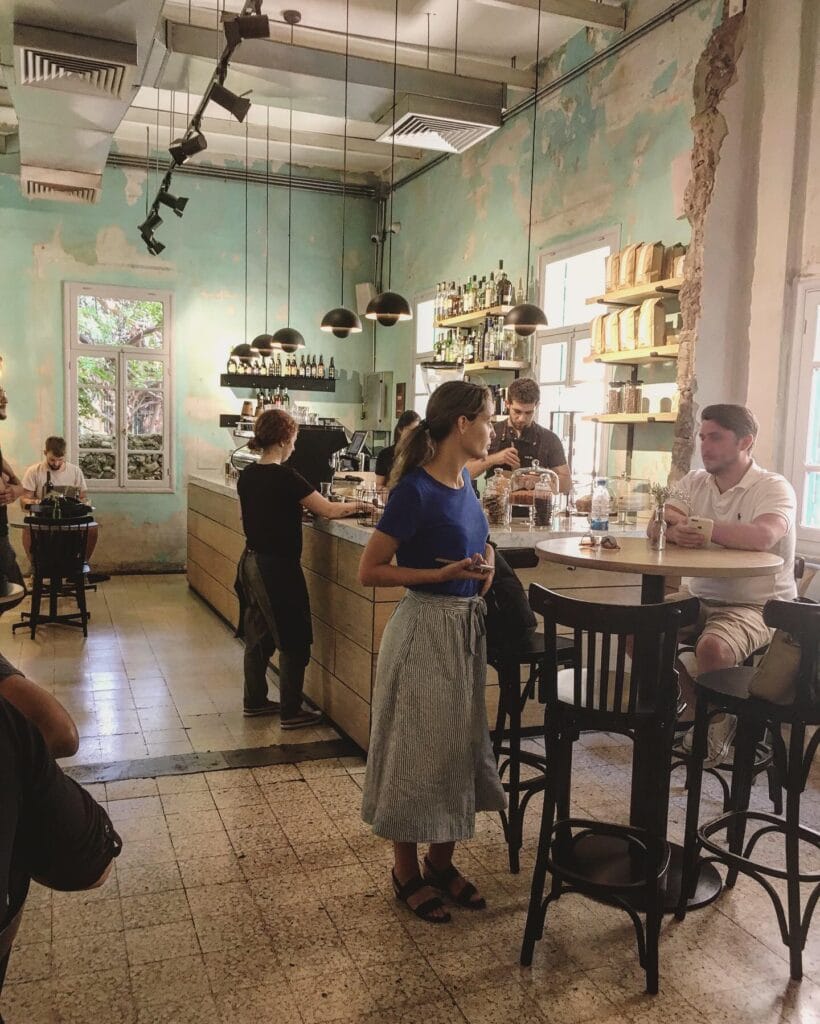
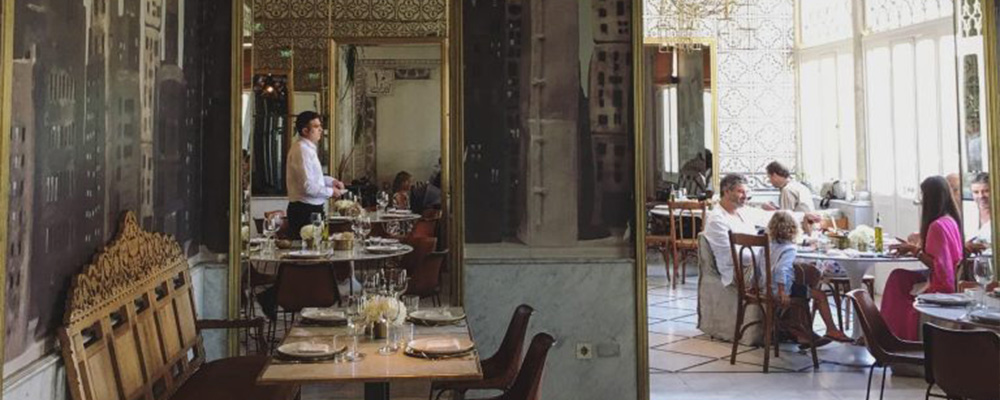
That evening we dined at Enab, a magnificent restaurant in Mar Mikhael (probably among the best of our trip), the art district of Achrafieh. I liked to believe that we were staying in none other than Beirut’s best neighbourhood, as quiet and embellished with bookshops, cafes, photo exhibitions, craft workshops and surviving Levantine buildings in the mornings; as bustling, alive and crowded in the shabby chic, underground, elegant or often Armenian cuisine venues in the evenings. Achrafieh was much more sophisticated than Hamra, more refined, tidier, more residential. Most of the establishments were located on Armenian Street, a flat avenue leading towards the east of the city, to the Armenian quarter of Bourj Hammoud. In the middle of the avenue, there were still the remains of a train station abandoned since the war. Above Armenian Street climbed colourful stairways, which at night became the stalls of cafes and restaurants.
That evening, however, we had an after-dinner date. Another ace up my friend’s sleeve. She said to have shared valuable time with her Lebanese roommate’s best friend, in Armenia. This guy was from Beirut. That night we were supposed to meet him in Mar Mikhael at some Armenian club, whose details remained unspecified. He worked in the wood industry and lived in Achrafieh, near Bourj Hammoud, his name was Antranik, called Anto.
Without really knowing where we were heading, we went towards Bourj Hammoud. A bit by intuition we tried to probe every place we came across like two people of dubious intelligence, eventually being attracted by a bougainvillea! It was the pergola of Seza Bistro Armenien, a very cosy tavern whose allure made me spy on the menu, which obviously abounded in basterma. We found ourselves crashing a party, where trays of Ararat vodka were circulating. Chairs had been moved to the walls and everyone was dancing festively to Caucasian music. While I was unwrapping the menu, a guy approached and attacked Maria Chiara: it was Antooo! Unbelievable. Fate delivered him to us although we didn’t even fix a meeting point. A tall Armenian in his thirties with dark eyes, thick eyebrows and a super sunny smile. “Welcome to Beirut!”
He embraced Mary like a sister. Soon after, she had introduced us to her sister, her parents and a few relatives. It was a welcome party for some family friends, with a few bottles of vodka in tow. We were invited to dance. Later we sat down for a cigarette under the pergola. We were explained that every summer these Armenian diaspora families would gather in Beirut, some of them living in Jordan, some in Syria, some in Iraq, some in Armenia. Anto’s grandfather came from a small town in central Anatolia, Yozgat. At the time of the genocide, they were displaced to Armenia, where his father had grown up before moving to Lebanon. His father was the champion of the night. 180 kg of moustache and hospitality, he had fallen in love with us when he realised we spoke Russian, the language of his Soviet past. ‘Have you seen what a beautiful wife I have?’ he slurred, to make us laugh. His wife would soon take him home, having invited us the day after to a party in an unspecified village in Lebanon, where we would witness the ‘slaughter of the ram’. I learned that there are in fact a myriad of Armenian villages in Lebanon, the largest of which is in the famous city of the Roman and Umayyad past of Anjar (in the Beeka valley).
Lebanese Armenians now number 100,000, divided between east Beirut and the rest of the country, where they have built churches and founded association centres, schools and universities, including the famous Haigazian University near Hamra. What remains of them is a strong sense of identity, which can be seen in the preservation of language, teaching, currency (yes, Armenian currency circulates in Beirut in addition to the lira and the dollar), music and cinema, the memory of the Caucasian or Turkish past, and cuisine, which emerges in several corners of the city in the form of lahmajoun take-away (Armenian pizza covered with minced meat, onions, vegetables, spices. It is sometimes served spicy, and is popular in Turkey, Cyprus, Armenia, Azerbaijan, Syria, Lebanon). On a political level, instead, the Lebanese Constitution recognizes the Armenian only a parliamentary representation, preventing them from the access to the position of President of the Republic, mandatorily reserved to a Christian Maronite, of Prime Minister, reserved to a Sunni, and of President of the Parliament, prerogative of a Shiite.
‘My sister is getting married in Puglia next September’, said Anto. His sister was beautiful, equally sunny, in love with Italy and Italians, and spoke our language. She was moving to Gallipoli the following September. Of course we were already invited to the wedding, but without boyfriends, Anto pointed out! Ahah ☺
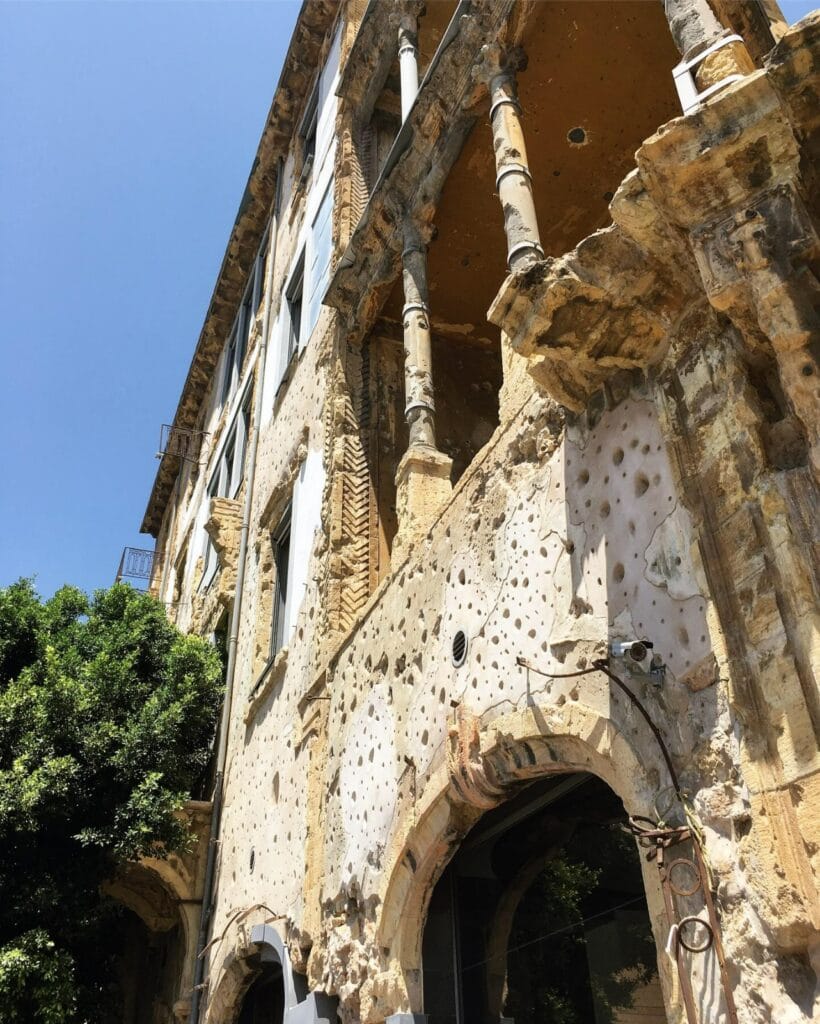
The first day in Beirut had ended like this, with the generational tales of an Armenian clan, in an Armenian tavern, in the heart of Lebanon’s capital. All this after 15 km of walking amid rubble, futuristic skyscrapers, dips in the Mediterranean, backgammon in the chaos of Hamra, an aperitif and an argument with a taxi driver.
On returning to the hostel, we were devastated. I had prepared a very detailed programme for the next day, when I was still neglecting the situation of the roads and infrastructure in Lebanon…