“You just have to go down to the old car park by that shortcut, it is not very intuitive, but if you follow my instructions you can get to the bus station without having to walk all the way to Gemmayzeh”. The receptionist told us not to be frightened if the walls of that car park still bore Phalangist symbols and marks of a few bullets. That place was only an outpost during the civil war, now ‘it is quiet! It is just abandoned’.
I had woken up early that morning, and had been loitering in the lobby for quite some time. That was a scene I would repeat more or less every day thereafter. I was to become the receptionist’s nightmare. I had set my mind on going to Byblos (Jbeil) and Tripoli, towards the north of the country. Only I ignored a few details. There was no railway line in Lebanon, whereas renting a car was not only pretentious, due to the shortage of rental cars, but completely impractical, no westerner was so bold to drive on the streets of Lebanon. Taxi? Uber offered rather steep fares to reach our destination. So..how were we supposed to get to Byblos (Jbeil)?
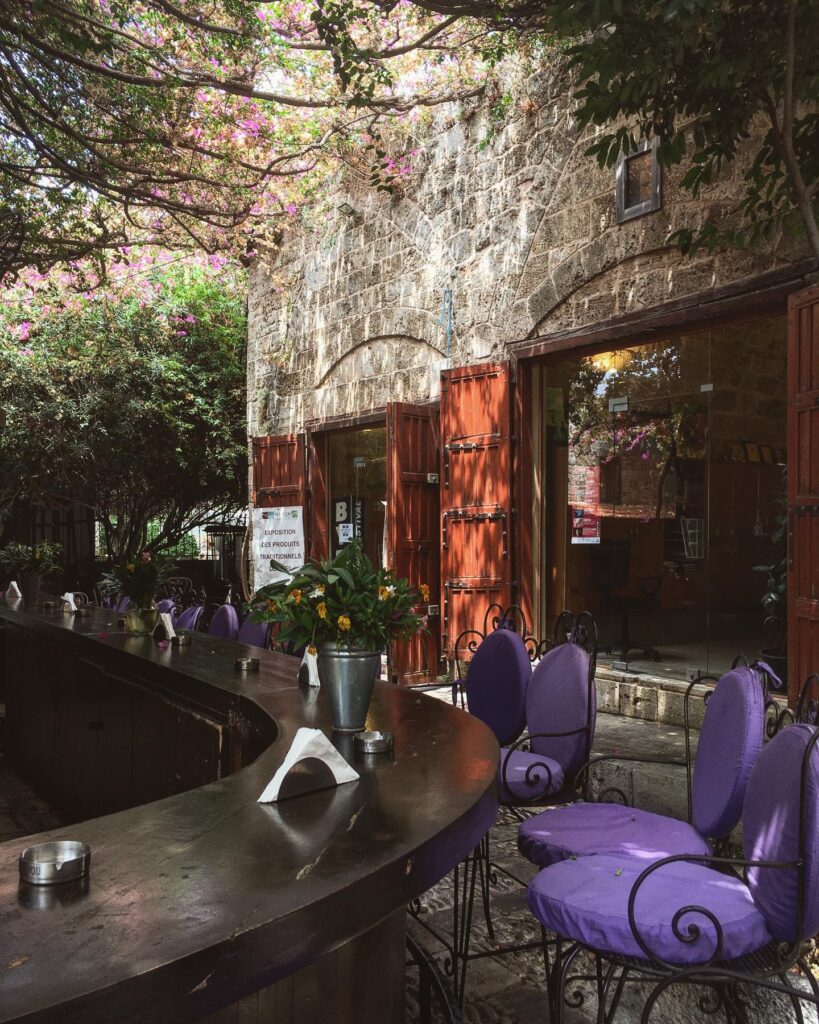
Basically, there was a daily connecting bus between Beirut, Byblos, Batroun and Tripoli. Or at least, these were the main stops. Actually, the bus could have stopped basically anywhere, even in the middle of the ring road or under some supermarket. We were told that the timetable was ‘flexible’. ‘Every now and then buses leave, I can’t tell you exactly when, go to the bus station and ask, the departures vary every day. Sometimes they don’t leave, or they do only in the morning, not guaranteeing the return connection. But try it! You will like Byblos’. I was undecided whether to get nervous at the randomness of the circumstances or whether to give in to the charm of the steady Lebanese optimism. The combo really intrigued me.
The plan was this: visit Byblos in the morning, Tripoli in the afternoon plus beach chill in Batroun before returning to Beirut.
..We never made it to Tripoli. In any case, we left.
We made it through the car park by sneaking into a burrow just below the terrace of our room. We exited into a dusty and dark taxi rank that resulted kinda awkward and inhospitable to us. We slipped a few metres further on, there were several buses parked for various destinations, the bus to Byblos was about to leave in less than twenty minutes. It wasn’t much of a bus, it probably hadn’t seen maintenance for a few years, let alone an arguable fresh mountain air smell. In any case, once boarded, we began to learn what was outside Beirut, what adorable traffic madness existed at least as far as the coast of Jounieh, the ‘Lebanese Monte Carlo’. Lebanon is small, after forty minutes we reached Byblos one way or another. I had realised it by accident, looking up our location on Google Maps. Thus, I begged the bus driver to disembark us, as there was no chance to book the stop via any sort of device. He left us in the middle of the ring road.

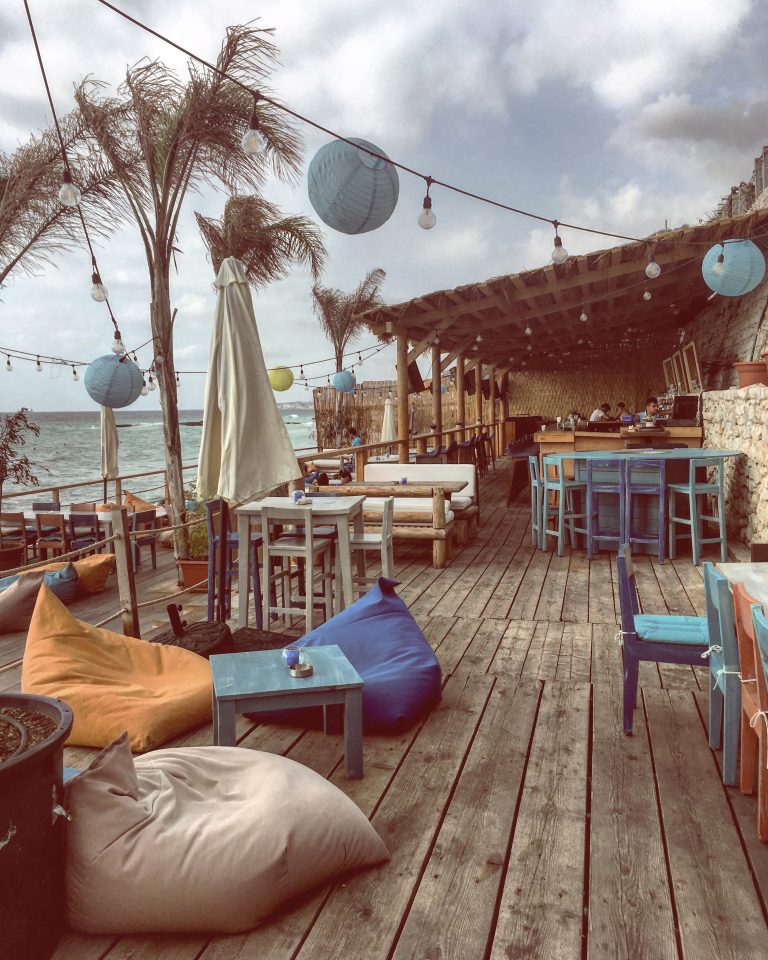
Byblos
Erected seven thousand years ago under the Phoenician name of Gebal, the city that today slumbers on the shores of the Mediterranean was renamed by the Greeks as Byblos (hence the name of the Holy Book), because of the papyrus trade. As skilful traders, the Phoenicians engaged in flourishing exchanges first with the Egyptians and later with the Greeks, also selling the famous Lebanese cedar wood, the same wood on which they engraved the oldest known phonetic alphabet. Evidence of these trade links was also provided by mythological contaminatio: according to Syro-Phoenician mythology, the god Adonis was born on the shores of this city and later married the Phoenician and Semitic goddess Astarte; according to the Greek pantheon, Adonis instead mated here with his lover, Aphrodite.
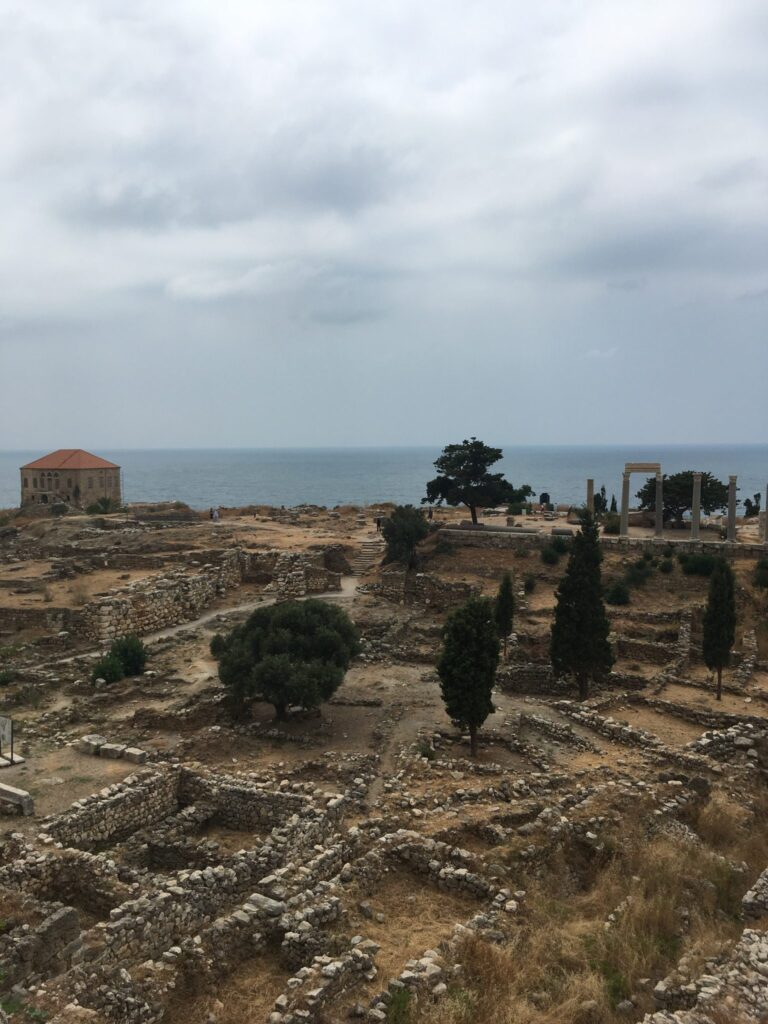
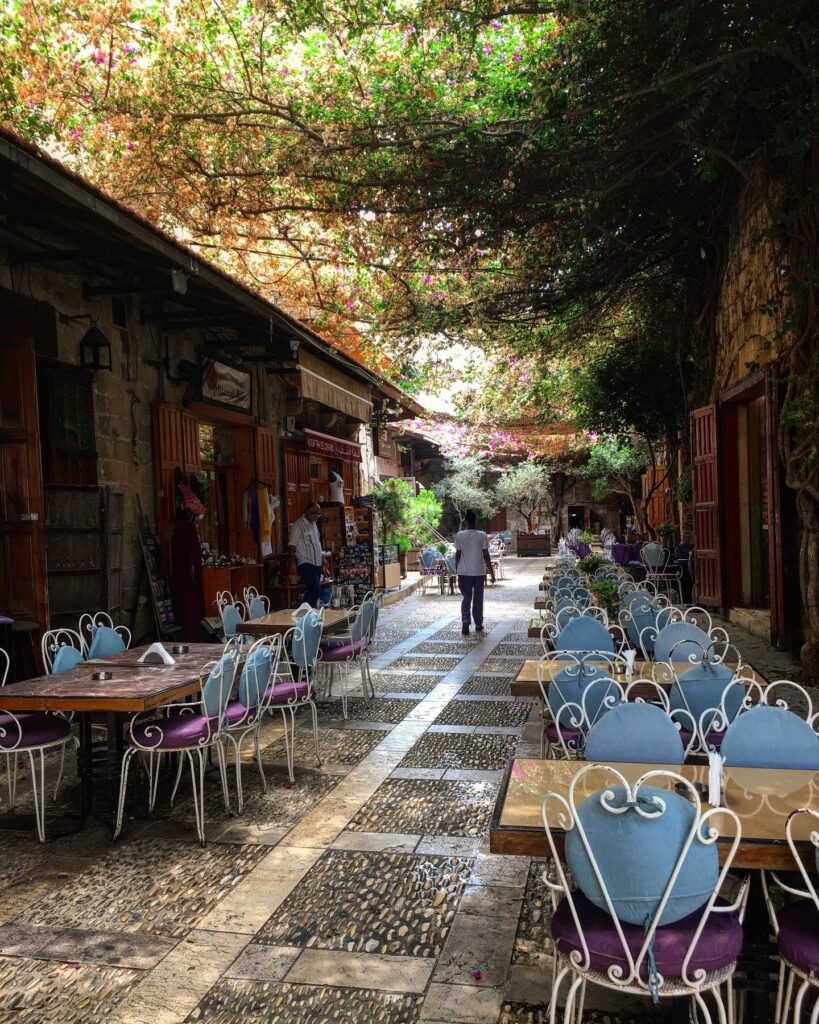
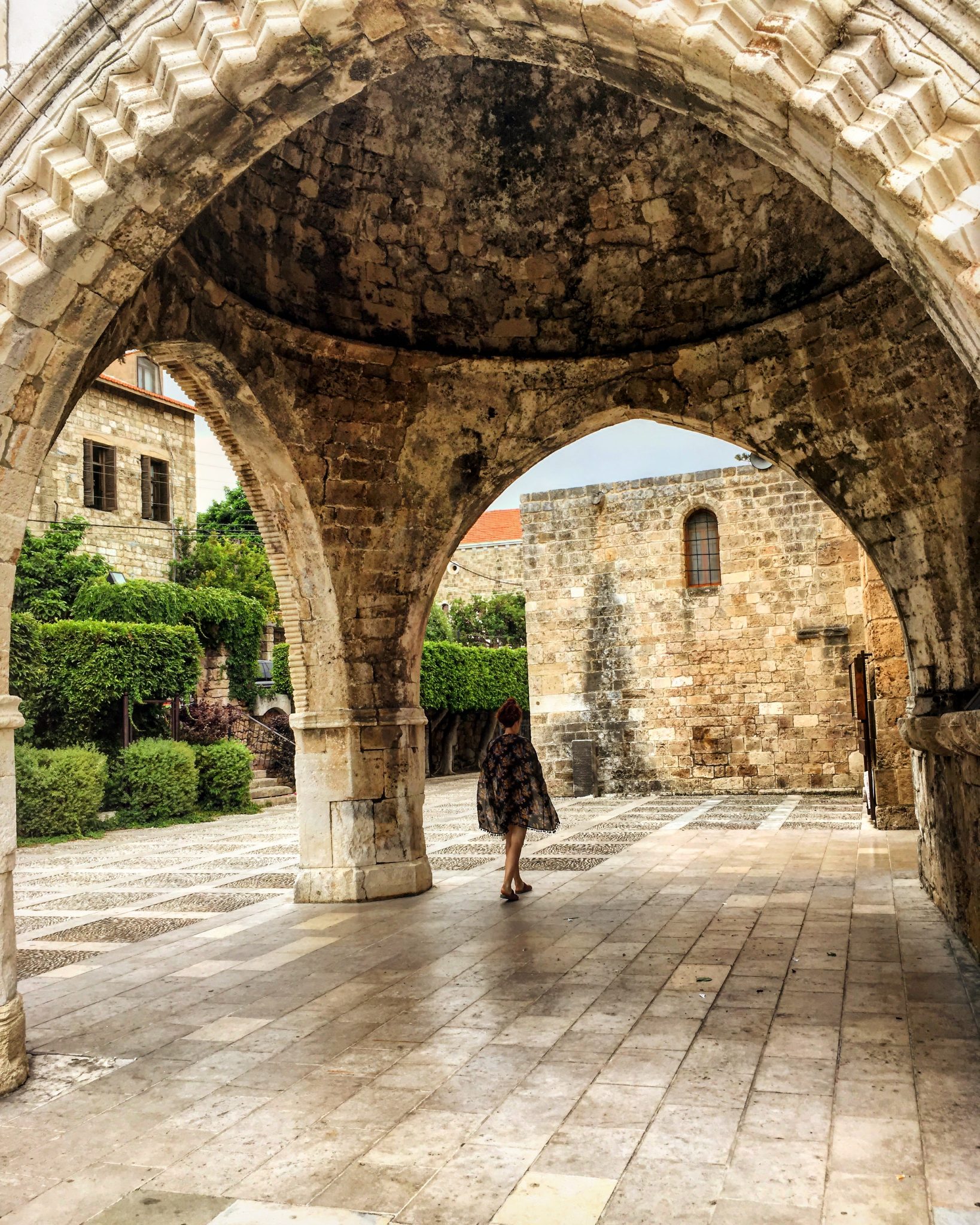
It was a port of extraordinary prosperity, whose archaeological sites still bear witness today: the Egyptian temple of Baalat Gebal (2800 BC), the Roman amphitheatres and baths, the Crusader castle and the church of St John Mark (built in the 12th century), were through centuries assimilated by the Genoese, the Mamluk and the Ottoman Empire. Today, Byblos, a Christian-Maronite stronghold, appears an enchanting Italian ochre-stone “borgo”, where the neat and graceful spice market intersects with cobbled lanes circled by with bougainvillea. Down by the harbour, the prestigious Byblos Jazz Festival attracts internationally renowned artists every summer. Byblos is an oasis of tranquillity, quiet, floral and enlivened by fine restaurants. It was here, Adonai Le Petit Libanais, that I tasted the best hummus of the Lebanese expedition (for the record, I promised myself I would order one at every place we would sit). Our lunch: a glass of Lebanese red wine, hummus and some meatballs grilled on a flaming ceramic crock. Freshly baked pita. That’s life.
The visit to Byblos took longer than expected, it was afternoon. Reaching Tripoli had already become impossible, we wanted to at least reroute to the beach and then to the fashionable Batroun for a dinnertime on the Phoenician harbour. There was no transport to the beaches we had identified, no buses, no lines or taxis circulating on the road… The idea of asking a lift to ‘a woman with a nice car’ came up. From my Caucasian experience I remembered phantom toothless taxi drivers who used to randomly tape down the steering wheel. The main idea was to avoid this experience in Lebanon. Instead, after half an hour of wandering, we were in a beat-up car heading towards the coast, but in less than five minutes we seized the quickest opportunity to get out and proceed on foot…our driver did not inspire much confidence.
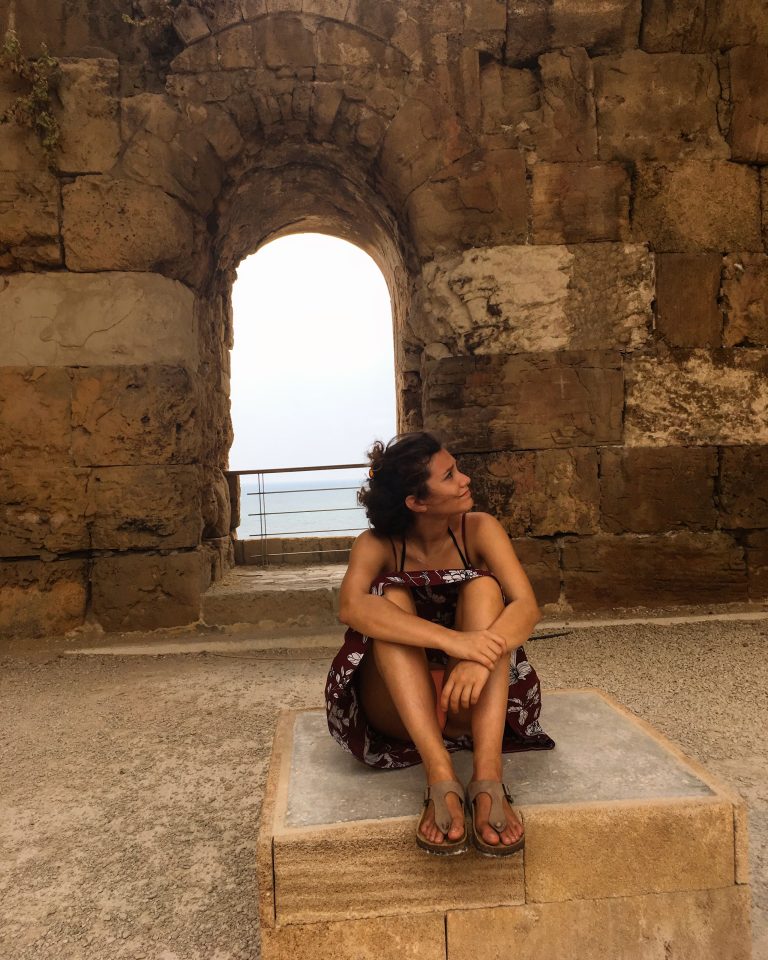
Back on the road. Thanks to google maps, we got the awareness of being more or less close to the coast. As the sea appeared on the horizon, we bumped into one of the old Lebanese army checkpoints. Only later did I learn that to access private beaches it was sometimes necessary to undergo road checks by the army. This condition was actually common to many roads in the country, although it was being done for strictly preventive reasons. I had the constant feeling that in Lebanon there was nothing to fear. Or, if ever, the Lebanese would always have diluted the circumstances through their adorable fatalism. This triggered in me an inexplicable sense of freedom.
Anyhow, today (2024), in the Lebanese liberal political debate several political forces are advocating the demilitarisation of roads.
Well, finally we would spend the whole afternoon on the deckchairs of Pierre & Friends, a colourful beach bar with oriental mix facing the Mediterranean. Without wondering how we would get back to Beirut, we simply fell asleep on the beach.
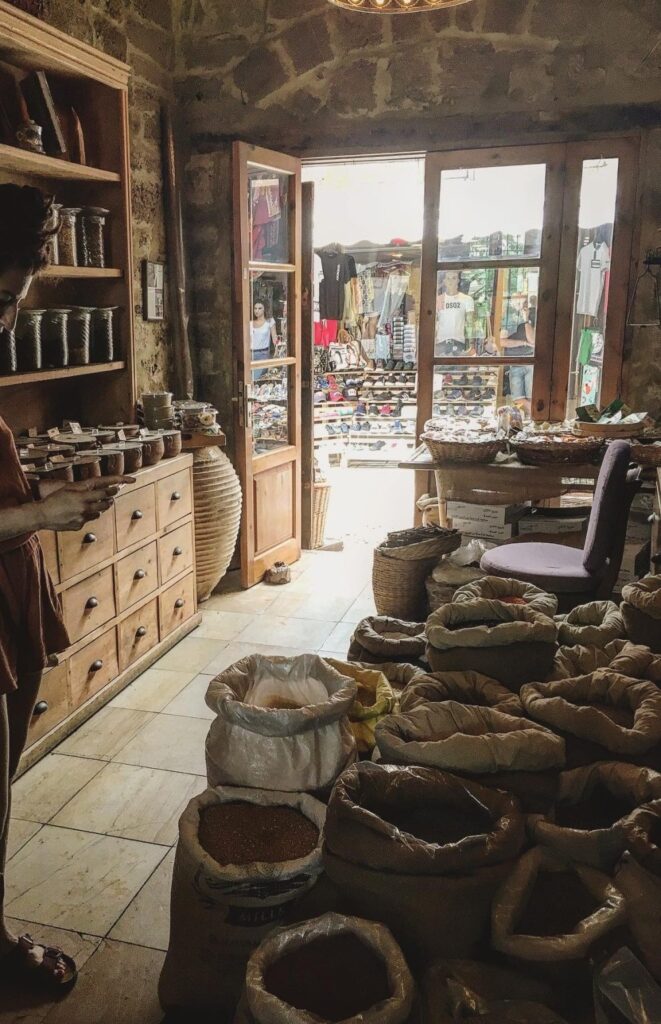
Back? Bah, apparently it was hitchhiking day, we were starting to enjoy it. Besides, we would never have come back any other way. We jumped into a jeep that drove for an hour and a half at outrageous speeds on the coast road from Batroun to Jounieh. We then took the highway to Beirut, getting stuck in Bourj Hammoud traffic and ending up in front of the Saifi. Wearing a baseball cap, the guy worked as express courier all over Lebanon. As he only spoke Arabic, via google translator I proposed him to shoot ourselves some Lebanese pop. All we had to do was pretend not to understand that he wanted our numbers, pretend to guarantee our availability for other adventures on four wheels, and get the hell out of there in the hostel. The logistics of that third day of trip would prove to be the rule for the next few days, in the name of chance, improvisation, contingencies. Unfortunately, or perhaps fortunately, I had realised from that day that Lebanon was certainly not a place where one could hope to follow plans.
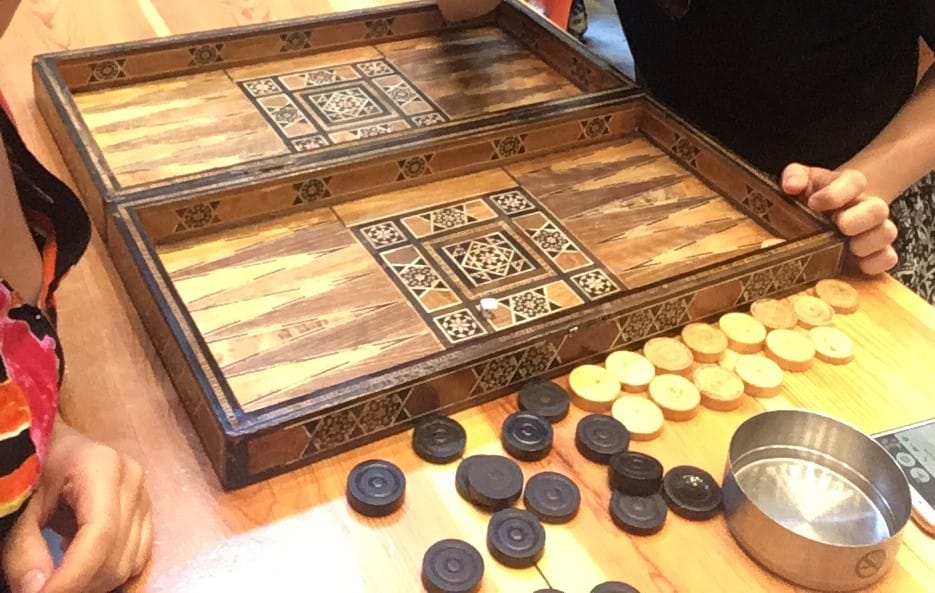
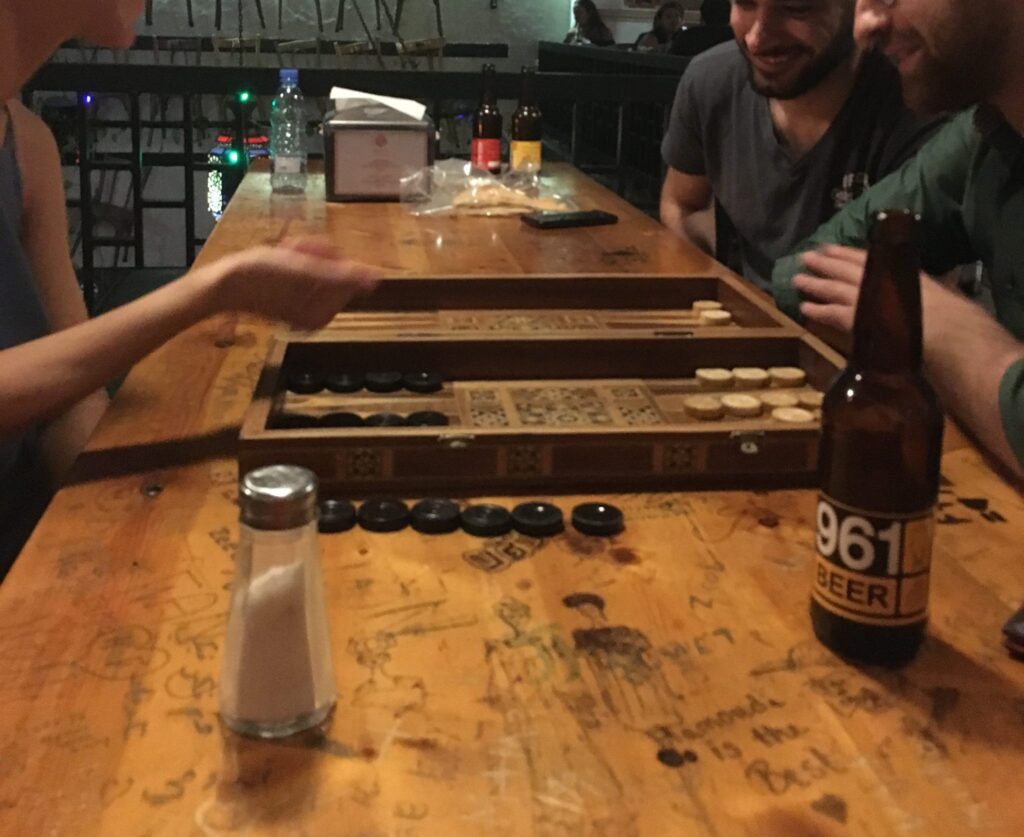
That evening we had a date with Hassan (see ch. I of Lebanon’s section) and one of his childhood friend, they were going to take us to one of Hamra’s underground venues, Bayt Em Nazih, for a mezze and a backgammon tournament..